
 Filmmaker Selena Burks-Rentschler is an Ohio filmmaker, writer and director and last semester taught in the motion pictures program at Wright State University. She’s just wrapped a project where she served as the Associate Producer of Redlining: Mapping Inequality in Dayton and Springfield a documentary that debuts this month on Think TV. This one-hour documentary tells the story of local families who were impacted by redlining, and the lasting effects of this federal policy on our region. It also makes some surprising discoveries about the roots of redlining that trace back to our region, and some larger-than-life personalities who have been all but forgotten. recently took time to answer some questions about her involvement with this project.
D937: How did you become involved in this project?
SBR: Gloria Skurski, the Chief Education Officer over at ThinkTV, invited me to apply for an associate producer position on a documentary about redlining in Dayton and Springfield. She read Richard Rothstein’s book, The Color of Law, and was inspired to make a documentary about the long term ramifications the federal policy of redlining had on the region. I later met with the film’s producer, Richard Wonderling and the three of us had a conversation on the importance to tell a local story, to not only discuss the challenges, but to also show the resiliancy of the communities who’ve been adversely impacted by redlining and other forms of housing discrimination.
 We were all on the same page and that was incredibly valuable. I lived in redline communities as a child. And I remember not being able to wrap my mind around the reasons why my neighborhood didn’t have access to certain amenities such as grocery stores, doctors offices or banks. I knew something was wrong but I didn’t have the knowledge or vocabulary to describe what it was until I became apart of the production team.
D937: What do you learn from working on it?
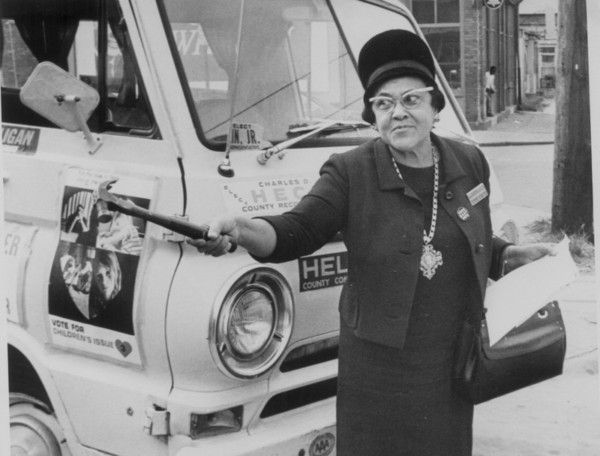
Mrs. Lelia Francis
SBR: One of the first things I did was read Rothstein’s The Color of Law, it was required reading and rightly so. There was a distinction made between De Facto segregation and De Jure segregation. And redlining was government sponsored segregation.
When I studied the maps from University of Richmond’s Mapping Inequality website, and read detailed descriptions I was floored by the verbiage used to describe immigrants, people of color, and specifically African Americans. There’s so much I learned from working on this documentary, too much to say here. But I will say I learned about some of the local civil rights activists and heroes from the 1950s, 60s and 70s. Most notably, Mrs. Lelia Francis. She was the first Black woman real estate agent in the nation and the first Black real estate agent in the state of Ohio. Not only that, she owned a successful real estate business with her husband and was one of the founders of Dayton’s first Black owned and operated bank, Unity State Bank.
D937: Why should people watch this?
SBR: Our goal with this documentary was to inform, educate and create a space for dialogue around the discussion of our country’s history. When one group suffers, we all pay the price. In order to address the issues of racial disparities in health, education, economics and housing, we must understand how we arrived here. And as I’ve said before, knowledge is power. It’s essential to unpack the legacy redlining has had on the Miami Valley region because what happened here has happened in every major city across America. This documentary lays bare the government’s role in mapping our segregated cities and suburbs, which left many Black Americans with little to no options on ways to access the American Dream.
Airdates for the documentary are:
Thursday February 24, at 9pm on ThinkTV16
Sunday, February 27, 1:00pm on ThinkTV16
