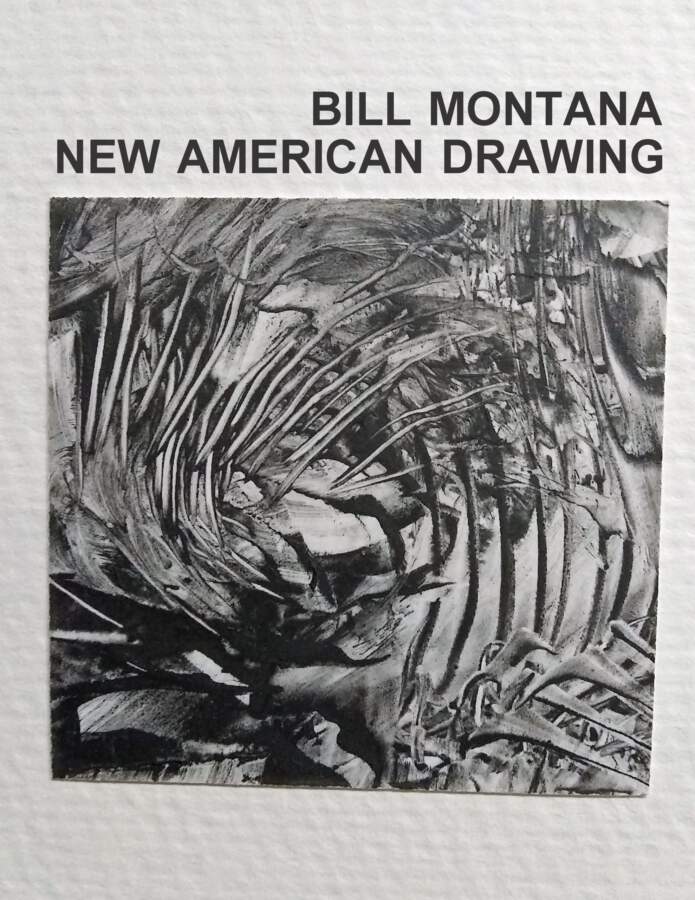
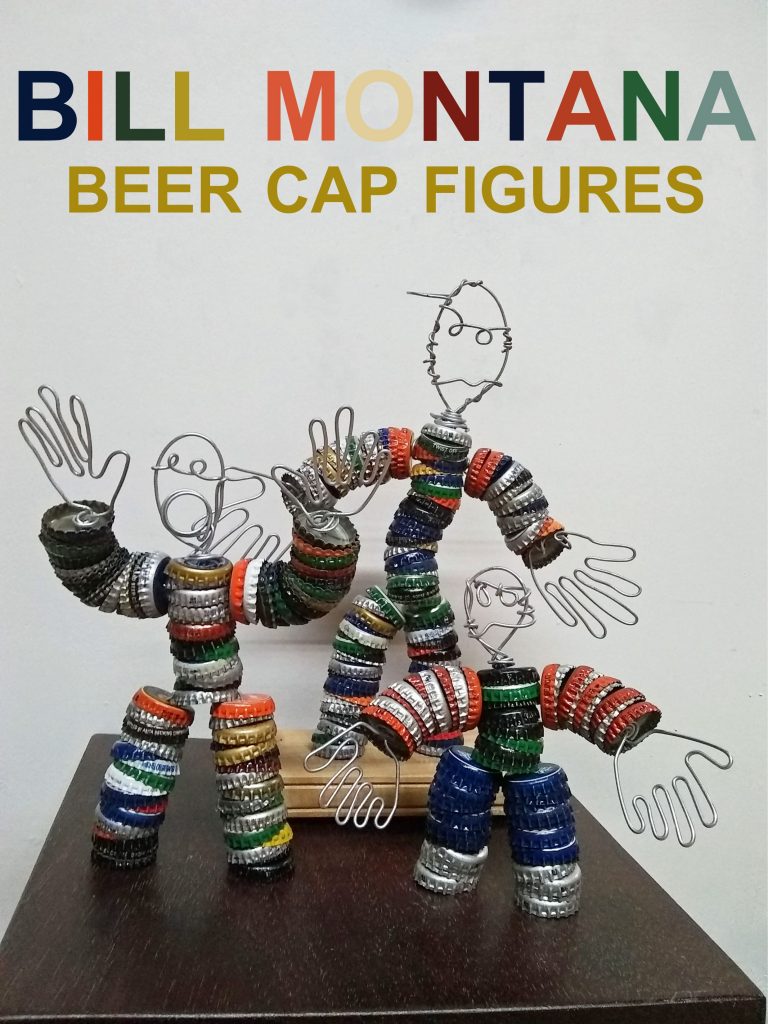
• Skip to primary navigation
  • Skip to secondary navigation
  • Skip to main content
  • Skip to primary sidebar
  • Home
  • Event Calendar
    • Submit An Event
  • About Us
    • Our Contributors
    • Subscribe
  • Advertise
  • Contact Us
  • Where to Pick up Dayton937
  • Arts & Entertainment
    • Art Exhibits
    • Comedy
    • On Screen Dayton
    • On Screen Dayton Reviews
    • Road Trippin’
      • Cincinnati
      • Columbus
      • Indianapolis
    • Spectator Sports
    • Street-Level Art
    • Visual Arts
  • Dayton Dining
    • Happy Hours Around Town
    • Local Restaurants Open On Monday
    • Patio Dining in the Miami Valley
    • 937’s Boozy Brunch Guide
    • Dog Friendly Patio’s in the Miami Valley
    • Restaurants with Private Dining Rooms
    • Dayton Food Trucks
    • Quest
    • Ten Questions
  • Dayton Music
    • Music Calendar
  • Active Living
    • Canoeing/Kayaking
    • Cycling
    • Hiking/Backpacking
    • Runners

Dayton937

Things to do in Dayton | Restaurants, Theatre, Music and More

  • Facebook
  • Twitter
  • YouTube
  • Instagram
  • Pinterest

bill cunningham

Dayton Artists United First Group Show Kicks off Friday

March 2, 2020 By Dayton Artist United

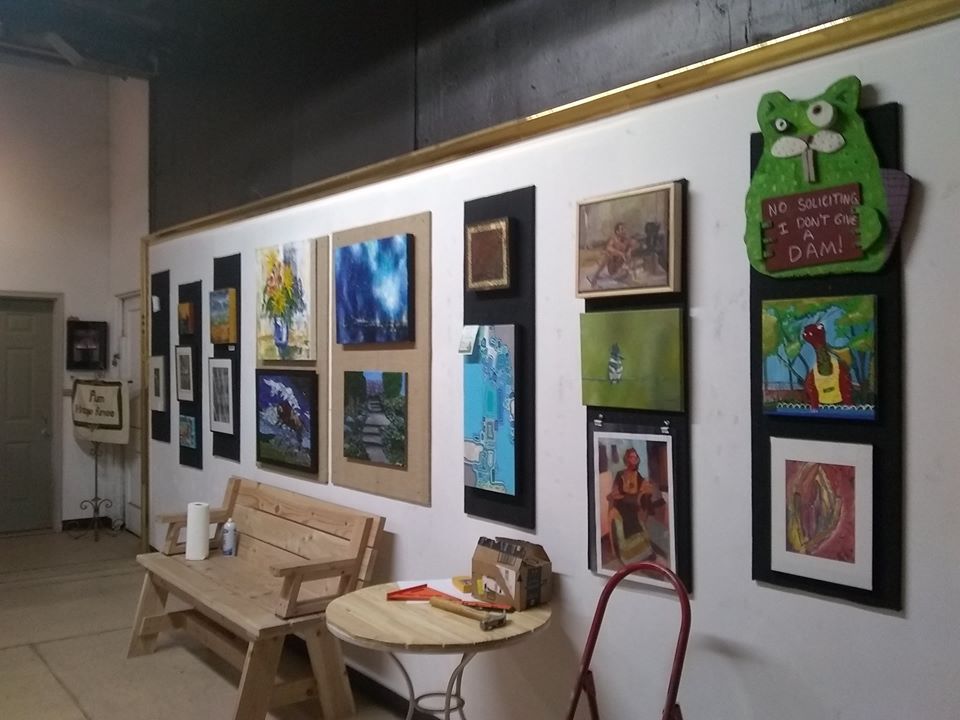
A group show of work by the members of Artists United Dayton opens Friday, March 6, 2020 at the Orphanage Gallery, 73 N. Dutoit St. Dayton, OH. The group show at the Orphanage Gallery is offered by Bill Cunningham and curated by Bill Cunningham and Samantha Mang. The show features work by more than 40 visual artists, and because Artists United is a network for artists in all media, the show also includes writers, a fashion artist, musicians and a magician.  The opening is Friday March 6, and the show will be open on March 7 for Saturday after, and March 15 for third Sunday. 

Curtis Bowman

My name is Curtis Bowman. I am a member of Artists United Dayton and I’d like to share with you how  Artists United Dayton came about. Artists United is a non-profit organization based in Oakland, CA. It was founded by my friend Holly Million. Holly is a filmmaker. When she started making films, she discovered that there are things she needed, location contracts, employment contracts and forms for use of copyright. She thought these things would be easy to find. She was shocked to discover that there was no central clearing house of filmmaker forms—not even on the internet.

In 2016, Holly Million started talking to artists. She talked about sharing opportunities. She talked about sharing resources. Many artists were taken aback, many artists were excited. Many artists couldn’t believe there could be a network of artists willing to share information and opportunities.  But Holly kept talking. She talked about artists as the catalyst of the creative economy. She talked about shaking off the scarcity mindset that keeps each individual artist thinking they have to hoard what they have because there is never enough to go around. She talked about the power of the arts to heal, to strengthen, to unify.

Artists United was founded on December 6, 2016.

When Holly told me about Artists United, I told her “come to Dayton. We have a great artists’ community here. I have been a grantwriter in Dayton for more than 2 decades. I have worked with a lot of artists. We’ve got the goods!” Last year,  she came. In July 2019, Holly Million traveled to Dayton for a week . She toured artist’s studios. She premiered her latest film *A Permanent Mark.* She spoke to Dayton’s film community at a Film Connections Meeting. She attended an Artist’s United Networking event hosted by Jes McMillan in The Mosaic Institute Studios at Tend and Flourish, a collaborative retail and studio space on Brown St. At that event, attendees video-conferenced to an Artists United member in New Orleans.  Every where she went, Holly talked about artists, the power of the arts and the creative economy.

Artists United’s Dayton chapter was on its way. The artists have  been having monthly gatherings, an open meeting for artists to meet and talk to each other, at Wholly Grounds Coffeehouse, which is owned by an artist, Amy Williams.  Amy puts up local art, and kindly offers Artists United space to meet. At the January meeting, the group was tossing around the idea of having a show. Bill Cunningham stood up and said, “I have space available.” Artists began to sign up on the spot. A show was born.  It sounds simple, and it was. But behind the scenes, there is Bill Cunningham and Samantha Mang, who have put a ton of work into organizing the show.
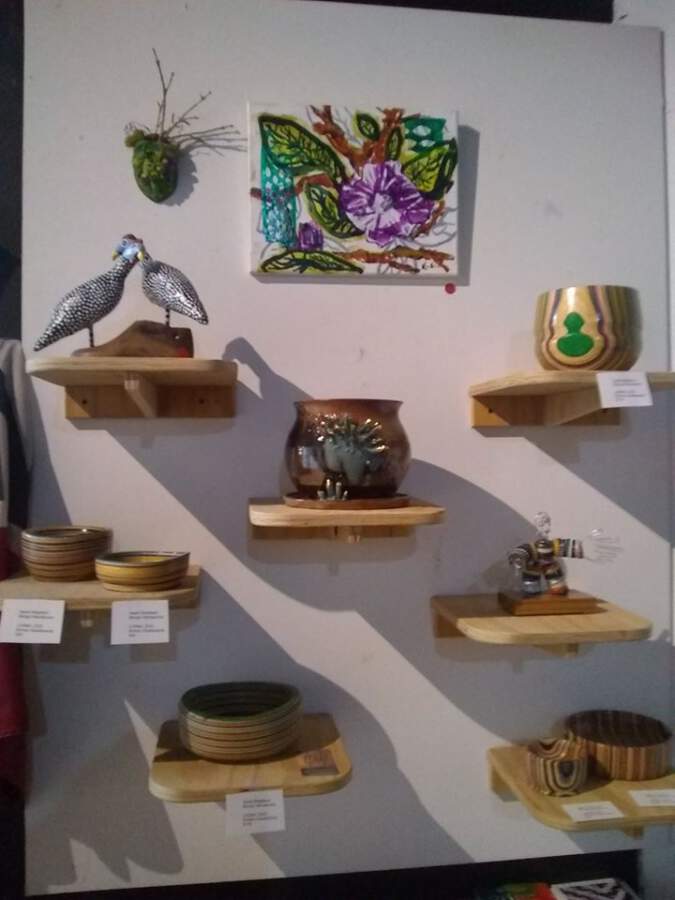
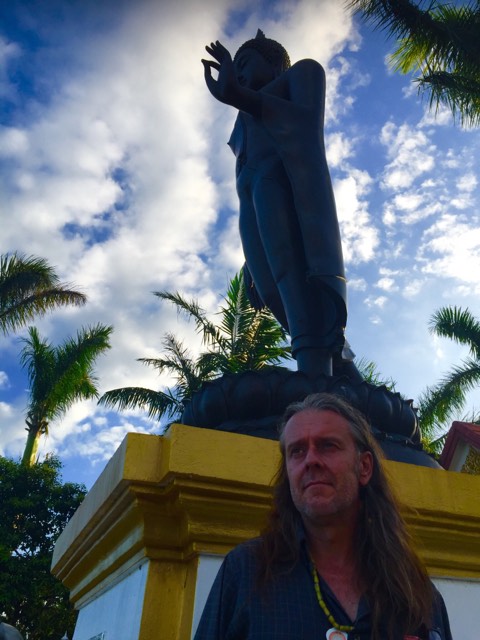
I founded the Artists United Dayton chapter with Jes McMillan, who is chapter captain. But Artists United Dayton has become its own thing: artist driven and artist run. The goal of Holly Million’s  Artists United was to build a worldwide network of artists.  She’s done it. Artists United has 35,000 members worldwide.  My goal for Artists United Dayton has been to connect our thriving network of artists to each other and the world.   It’s about artists—all artists. filmmakers, writers, visual artists, dancers, musicians, magicians—it starts with the artists. When artists lift each other up, when we share resources and opportunities, we enrich ourselves and our community. There is no fee to be a member of Artists United, its not a club, or a school. It’s what you make it. And the Dayton Artist Community can make it great. We’ve got the goods.   


Last July, Dayton pulled out all the stops to showcase its artistic talent. On March 6, at the Orphanage Gallery, we’re doing it again. The Artists United group show will remain up until after third Sunday, March 15.

Join Artists United by email to [email protected]

Look for us on Facebook, Artists United Dayton Ohio,  at https://www.facebook.com/groups/351991622115865/

Join in the next gathering at Wholly Grounds Coffeehouse, 825 Wayne Avenue, Dayton, Ohio on March 11, from 6pm to 8pm.

Filed Under: The Featured Articles, Visual Arts Tagged With: Artists United Dayton, bill cunningham, Curtis Bowman, Jes McMillan, Orphanage Gallery, Samantha Mang

Dayton Artists United: William Cunningham

February 16, 2020 By Dayton Artist United

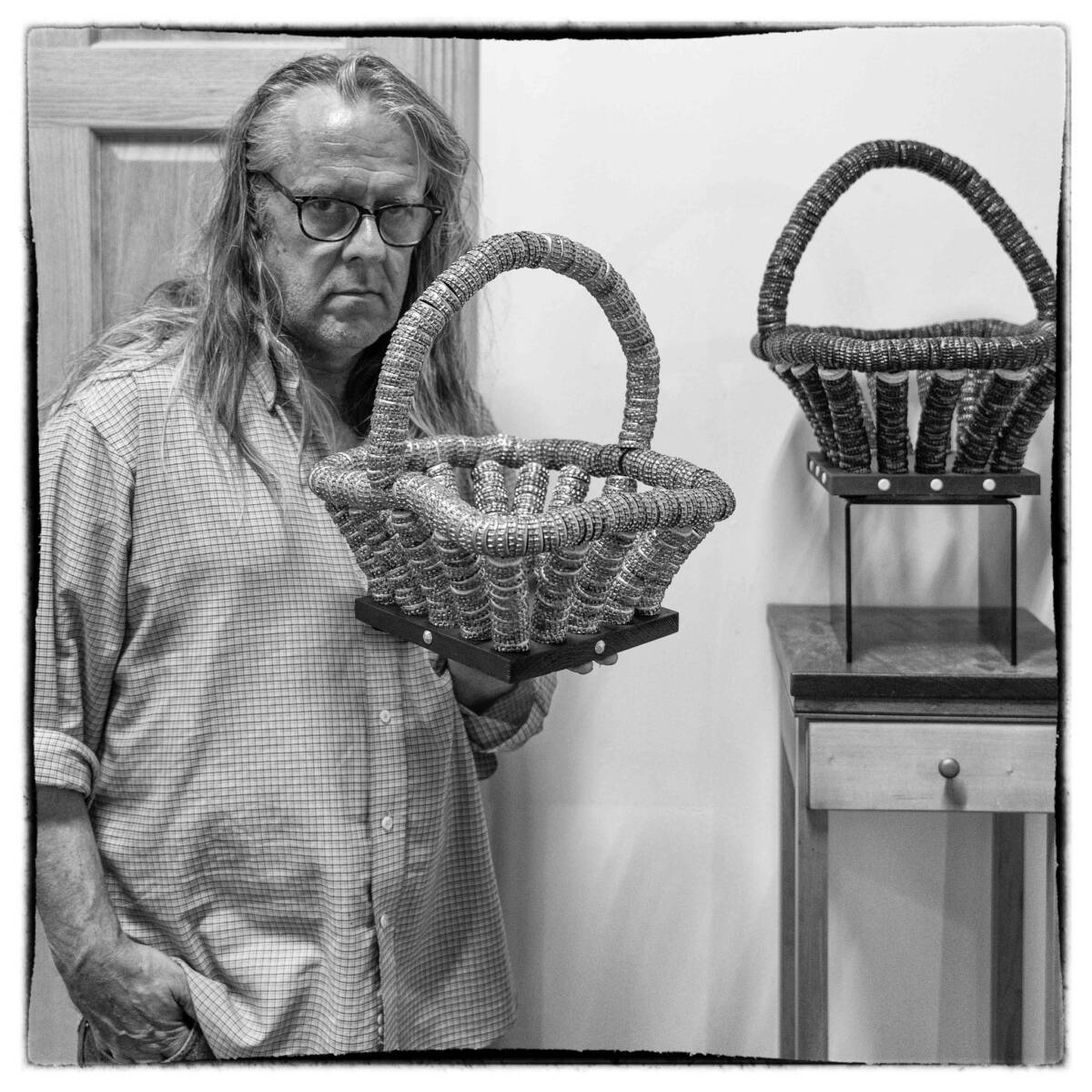
Photo by Alex Kamanandi

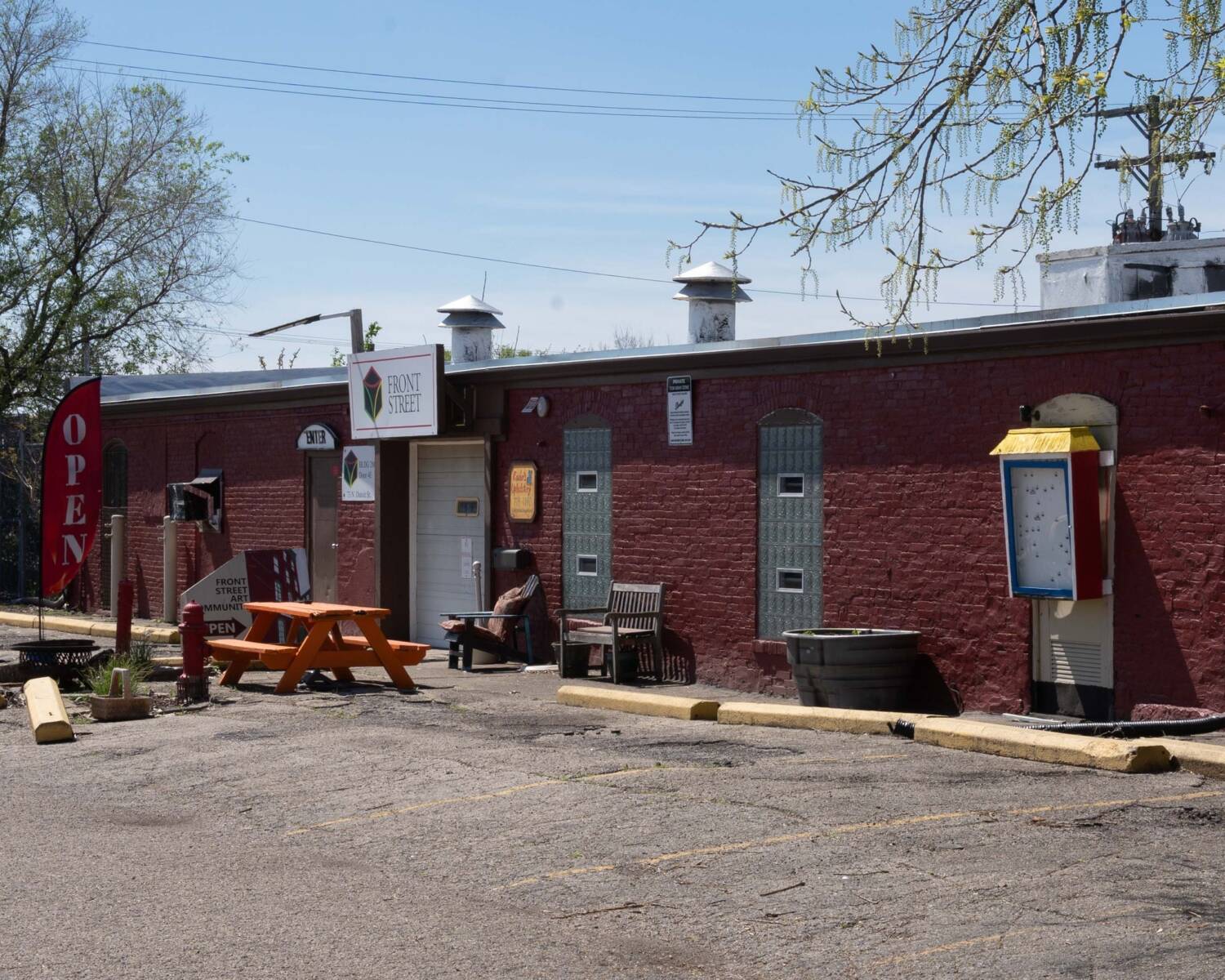
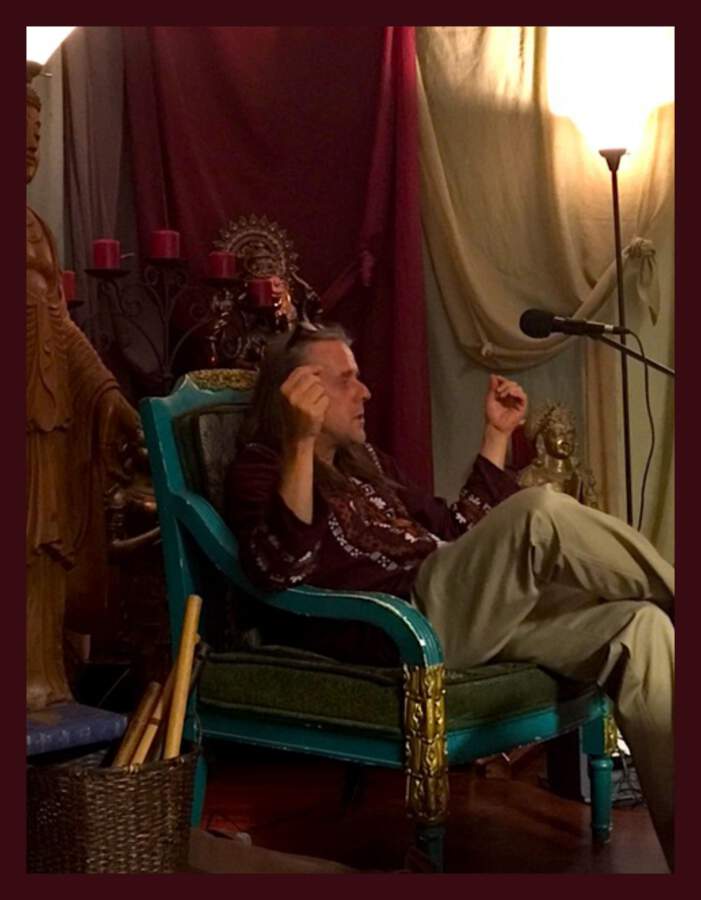
Artist United interview with William Cunningham, artist and curator of The Orphanage Gallery, 73 N. Dutoit St., Dayton Ohio 45402

DAU—So, Bill, are you from Dayton?

WC—I am. I lived other places, like Atlanta back in the early 90s and I travel a lot, so I get to see many different things.

DAU—What do you like about Dayton?

WC—I’m kind of funny about Dayton. I know a lot about Dayton and its history. I used to run Gallery 257 back in the late 80s, it was located where Press Coffeehouse is now.

But Dayton frustrates me. The Dayton art community frustrates me. There is so much potential there and it languishes as it has no supporting infrastructure for artist cultural production.

DAU—Talk to me about that. What do you mean by infrastructure?

WC—Mostly, I mean exhibition space. There is not enough open exhibition space for the artists we have, and we have a tremendous number of artists here in Dayton. As artists, we need places to see lots of various styles of art. We don’t get to go see each other’s work as it evolves over time,  unless you drop by another artist’s studio, which are usually not open. Most artists have to get a show for their work to be seen. It’s hard here to get shows.

There are few galleries that will show newer artist work or even established artist work for that matter. Let’s say an artist creates say 30-40 works, maybe 5 of those are actually show-able.  Art is a process, and not everything you turn out is your best work, work that as an artist you would be willing to show. Sometimes you have something to say and it doesn’t come across in the first 20 attempts. Or in 20 works the language for the work is not developed enough to be understandable for the viewer. But if you could get those five-good works into a group show for example, you could start to build up to something in the form of a conversation based on the viewer feedback of the work.

DAU—So, if someone came to you and said “Bill, we want to foster the arts in Dayton, and we need some guidance.”

WC—I’d tell them  1) Set up an exhibition space that is open for emerging artists. A pop-up sort of thing. Something that turns over rapidly, once a week or once every two weeks. Just a wall with two works on it would work to increase visibility of an artist work. By alternating the space so there is something new every week, say 50 weeks a year this way there is always new energy in the art space. 2)  Have a looser curatorial process, don’t try to control what hangs to much let other people sign-up to curate shows of other artist work. This really helps as one person should not be allowed dictate what is good or bad. 3)  Don’t control the artists. Don’t put your finger on them and tell them what kind of art they have to show. But do guide them in matters like pricing. Every gallery is different every art space is also different over time pricing patterns will develop which provides a range which art sells well at that venue.

DAU—I’m hearing that you don’t like to be told what to do.
WC—Hell No! Anybody will tell you that. I’ve been called a renegade. I’ve been called worse than that. I speak my mind. I’m not going to say I like something if I don’t and there are a lot of things I don’t like. Some of the things I don’t like are based on my experience. Like, I’ve got a bias against juried art shows. I hate all juried shows.

DAU—Why is that?

WC—Most of the juried shows collect submission fees and then they give out a prize that’s worth a fraction of the money they collect. The rest goes to paying for the show usually in a space that is already paid for. It’s a cash machine that exploits the artists. It’s really nothing more than a cash grab scam that preys on artist. And the jurors are laughable in most cases. They get someone that’s high profile, not high profile in the art world, but someone that people recognize, or a person in the government to walk around and give out a prize to the winner based on what? And then the emerging artists have to explain to that person about the value of their art and what it’s about. Then the show just becomes a personality contest.

Some time ago, I had a work in an abstract show. The juror comes in, he’s all pompous and talking about “post-modern abstraction’ in this way that showed he has no idea what he was talking about. He walked around and talked down to all the artists. Then, he awarded the prize to landscape painting. A landscape, a plen air landscape at that,  with a duck at a pond.  A landscape painting won in an abstract show! Turned out the person who won was related to the juror,  go figure.

Most jurors are friends of the curator—it’s a scam to make money as they oftentimes get paid as well. How does a young artist know which juried show is legit? At the galleries I run we will never do a  juried show.

DAU—No juried shows ever?

WC—Well, there is an exception. We were in ArtFest in Beavercreek last year. That was a juried show done right. The judges were people who knew what they were about. Michael Roediger; Director and CEO of Dayton Art Institute,  (3rd year as a judge), Lisa Seibert; with Dayton Local (4th year as a judge), and Amy Kollar Anderson; Internationally recognized artist, MCACD 2018 grant recipient. Samantha was one of the staff members for ArtFest. And, in my opinion,  this show was fair in its judging.

The booth I worked with won Best Interactive. We showed Front Street artists and had a second half that gave away spun art t-shirts. I ran the gallery side, which also had a little gallery that was interactive. All the works inside were free, provided by artists in the area. It was a good event.    

DAU—Samantha? You mean Samantha Mang?

WC—She’s part of ArtFest. She’s good people.

DAU—She’s co-curating the Artists United group show with you.  Thank you for that. I really liked what happened at the Artists United gathering where you offered The Orphanage for a group show.

WC— You wanted a show. I have an art space. I like what Artists United is doing. It’s like what The Orphanage does in some ways.  Artists United doesn’t charge a fee to be a member, right? The Orphanage has a zero-profit gallery model: $0 submission fees and $0 commission fees. Our mission is to provide a place for artist to show and sell work. Sales of  any work from an artist help support the artist. Our rules are simple: the artist must be present at the show’s opening. The artist, especially emerging artists, needs to mingle with other artists and art patrons. See there’s the network thing we have in common. Artists need to meet people in the public places away from the art studio. How else are they going to sell art? The gallery is supported by the art community attending the shows. We don’t handle any sales of artists’ work: the artists sell their work. But last year, at the galleries, artists sold over 600 works. We don’t take a cut all of that money, it all went into the pockets of the artists.

Let’s say you’re an artist, and you have your work in a group show, like the Artist United show that is coming up. You meet people, maybe you sell some art. If people like your work, they’ll  come to your studio. When you’ve built an audience, you can host an open studio event. People buy more art at events.  Group shows at The Orphanage broaden the exposure for everybody involved. This Artist United show already has 45 artist signed on and I expect a few more before it opens.

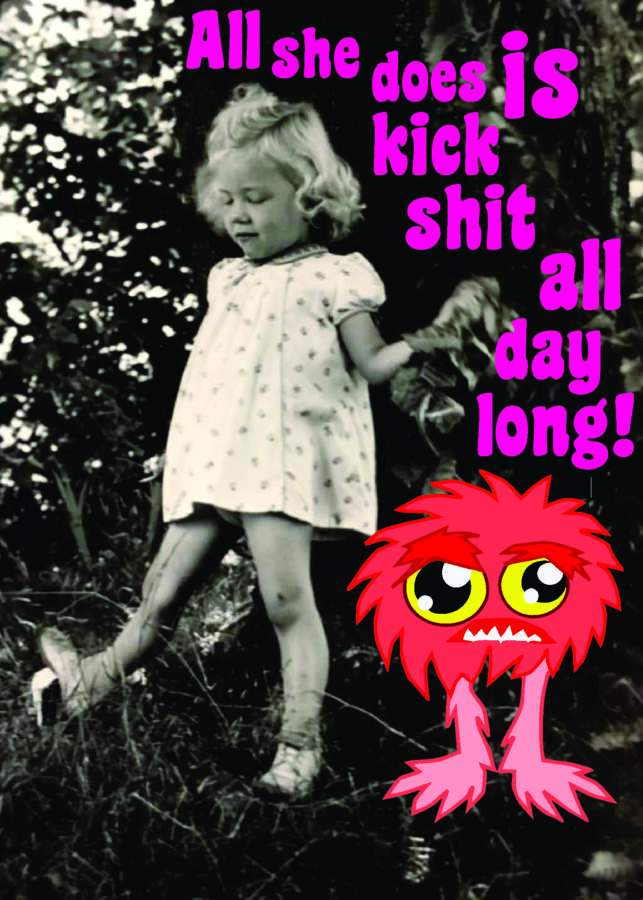
One of pieces from Pseudo Bibliography of Imaginary Friends a series of work from a couple of years ago where Bill Cunningham mixed two forms of bad art vintage snapshots and public domain clipart to create a new work.

Also, when you have your work in a group show, like the upcoming Artists United show on March 6, you see the work of other artists. You get to talk to each other about art. I love to talk to other artists about art. When artists talk about art, they don’t put a value on it, like “Hey, that could win a prize at a juried show with that work.” No, they talk about the work. The process. What brush did you use to get that effect? What inspired this thing? These sorts of things. Which helps artists expand what they are already doing. As they gain new information, their work becomes better, even if they do not use the ideas they learned about. The conversations, the exposure to other artists still had an influence on them. 

When artists participate in a group show they learn how a gallery operates. How to interact with the public. How to price their work. They watch what sells and what doesn’t. They look at how the show is put together—why did some works hang together? There are a lot of things that aren’t being taught. We have great art programs here. Sinclair has a strong art department, so does Wright State, so does the University of Dayton. The University of Dayton is the only one that teaches the business in some of its art classes.

The starving artist concept is a myth and based in propaganda. We need to stop selling it. Let’s stop charging $80,000 per year to teach kids how to copy some dead artists. We don’t need more academic art that says nothing. I want to look at art that says something. Art that says something I have never thought about before. Even if the work is reductive,  I am looking at art. Folk art, unschooled art, raw talent with things to say. These are the works that end up in museums. Original thoughts. Fun art. Art should be fun. It should be interesting. It should have something to say.

Art schools should teach how to mount a show, how to preserve work, how to pack and ship something like a painting. How to pay the bills as an artist. Every artist has a market. How do you find yours? This is what The Orphanage is exploring. It’s an entirely new gallery model.

DAU—How did you come to start The Orphanage?

WC–We had the space, in between the studios the hallway was just wasted space. We decided to treat those walls as pop-up art space in the beginning. The early shows at The Orphanage were all new local painters who had never shown work before. Those early group shows let more artists gain the art showing skills and gallery skills I mentioned earlier. These shows let them meet each other and broaden their networks. People coming to the gallery got to see some stuff they’d never seen before. We showed some of the Front St artists who hadn’t shown before. We introduced them to each other and the public. Since opening Front St. has energy. People are coming to see what’s new each month. There was a time when first Friday had only 20 people walking around now some of the shows have almost 1000 people. It’s growing all the time.   

Front St. used to be a factory, the space where The Orphanage is was the daycare center, so it seemed right, you know, to start showing new artists here. We do 12 shows a year, one a month. We’re open, technically open, not just unlocked, three days a month: First Friday, Saturday After First Friday  and Third Sunday. Last year we sold 600 works, and that doesn’t include the Christmas gift show.  Most of those 600 works sold during First Friday,  and the rest for the most  were Third Sunday. This year we have some big Saturday events in the works. I expect that day will pick up as well.

All in all,  I would say around 450 plus works sold during those 11 First Fridays last year. This year, since January and February are slower, I can say the number of works sold has doubled from last year. The Gallery is actually two galleries The Orphanage and Us and Them. Us and Them also contributed to those numbers and sold about 150 works last year. Us and Them only shows new artist work. But look at those numbers and tell me people are not buying art in Dayton. 

Photo by Alex Kamanandi

DAU—Those are impressive numbers. You’ve talked about The Orphanage, let’s talk about you for a bit. Tell me about your work.

WC–  Me? I do a little of everything. I’ve done sculpture, painting, writing. I’m well known in stage magic and mentalism. I’ve been an artist all my life, I have been doing art all my life. I didn’t study art in school. I studied history, philosophy, psychology, anthropology and archeology, but I couldn’t walk away from art.  I started buying and collecting art before I was 18. Art has always been there, in my life. Art makes me ask the question – why? Why spend your life thinking about whether you should do something or not? Art says, “why not?” So, do it.  Art is all about doing stuff, as an artist. Doing, not talking about it. 

DAU—Tell me some of your favorite artists.

WC–Peter Gallo, Mike Cockrill, Chris Martin, Thomas Nozkowski, Stanley Whitney. These are NY painters for the most part. I also like the work Sharon Butler, she writes a great blog called “Two Coats of Paint,” you should read that.

I like NY for art. The cost of living there is astronomical. That’s one thing about Dayton, you can live here. Of course, it effects your thinking. If your living in NY and  have to make 8-12 grand a month to pay for your studio and living expenses, you don’t mess around. You work in your studio; you network and talk to people in the industry. Art is a business, there’s no way to take the money out of it and still eat.

But art is more than a way to make money: it’s a cultural commentary, its documentation, its ideas in action. That’s why I love The Little Gallery, which is a micro gallery movement that is free to use by anyone who likes art.  The Little Gallery motto is make art, take art, leave art.  I built these galleries with two other artisans,  Greg Seitz and Cayman K. We’ve placed eight in the surrounding communities. These galleries are helping people by giving them an outlet for small works and getting people to collect art. All of the works at The Little Gallery are provided by artists for free.

DAU—Greg and Cayman K are artists here?

WC—Yeah, Greg Seitz is here in The Orphanage, Cayman K is across the way in The Front St complex. Anyway, the first Little Gallery is hanging outside The Orphanage on the building.

If you want art, it’s around and some of it can be found for free. A small work by a local artist you picked up at a Little Gallery is way better than going out and buying some formulaic painting that looks like something Picasso did, something that has been copied for 90 years. The work does not always need to be big to have importance and wall power. Some of the works I have seen in The Little Gallery have these traits.

DAU—But, just a bit of argument here. Sometimes people want something that is just pretty, and maybe matches their couch.

WC—No! If you start down that road, you’re done, and it will cost you more in the long run. Let’s say,  you have a gorgeous oriental rug, you don’t put a crap coffee table on it. You get a better table. Don’t just put something pretty on your wall to fill a space. Put Art on your wall.  Look at art, not pretty pictures. I am not saying art can’t be pretty. It can be pretty, but it shouldn’t be a pond and a duck pretty. It has to be authentic. It elevates you, having art around you makes you better, more thoughtful, more a part of the world. If you surround yourself with crap, all you’ll be able to see is crap. You won’t be able to see the difference. Treat yourself as something valuable, surround yourself with art.

85% of people think art is expensive. This way of thinking needs to be changed.  There is work you can buy, here at The Orphanage gallery, at every show, that is not expensive.  The sale of those works helps local, emerging artists. There is work you can take from The Little Gallery that is free and you’re welcome to take it just because you like it. People can have real art in their life. Speaking of which, Samantha Mang, who we spoke about earlier, just added a dozen of small salt paintings to the Little Gallery.  Those are available right now, for you to just take if you like them.

DAU—Bill, how can people find you?

WC—I’m on Facebook Bill Montana Artist and the William Cunningham Page and Instagram @bllmontana

DAU–William Cunningham, Thanks for taking the time to talk with me.  Thanks for the work you do for emerging artists and for hosting The Artists United group show, March 6 at The Orphanage. 

Filed Under: Artists United, The Featured Articles, Visual Arts Tagged With: Artists United, bill cunningham, Bill Montana Artist, The Orphanage

Bill Cunningham & Winter in Wartime – This Week at THE NEON!

June 3, 2011 By Jonathan McNeal Leave a Comment

Hello Everyone.

Well…none of our films performed wonderfully last weekend (though THE BEAVER did well enough to stick around for a couple screenings a day for one more week).  I AM and POM WONDERFUL PRESENTS: THE GREATEST MOVIE EVER SOLD have left.

Today (6/3), we open two new films – BILL CUNNINGHAM NEW YORK and WINTER IN WARTIME.

If you’re a regular reader of The New York Times, I’m certain you’re already familiar with Bill Cunningham.  If not, I’m certain you’ll still be charmed by the story of this wonderful photographer.  Synopsis for BILL CUNNINGHAM NEW YORK: “‘We all get dressed for Bill,’ says Vogue editrix Anna Wintour. The “Bill” in question is 80+ New York Times photographer Bill Cunningham. For decades, this Schwinn-riding cultural anthropologist has been obsessively and inventively chronicling fashion trends and high society charity soirees for the Times Style section in his columns “On the Street” and “Evening Hours.” Documenting uptown fixtures (Wintour, Tom Wolfe, Brooke Astor, David Rockefeller-who all appear in the film out of their love for Bill), downtown eccentrics and everyone in between, Cunningham’s enormous body of work is more reliable than any catwalk as an expression of time, place and individual flair. In turn, Bill Cunningham New York is a delicate, funny and often poignant portrait of a dedicated artist whose only wealth is his own humanity and unassuming grace.” (taken from Zeitgeist Films) Visit the OFFICIAL SITE.

[yframe url=’http://www.youtube.com/watch?v=NYqiLJBXbss’]

If you’ve been to THE NEON in the past few months, I’m certain you’ve seen the trailer for our next new film, the official selection from the Netherlands for this year’s “Best Foreign Film” Oscar.  Synopsis for WINTER IN WARTIME: “Near the end of World War II, 14-year-old Michiel becomes involved with the Resistance after coming to the aid of a wounded British soldier. With the conflict coming to an end, Michiel comes of age and learns of the stark difference between adventure fantasy and the ugly realities of war.” (taken from Sony Pictures Classics)  If you haven’t seen the trailer, be certain to take a look.  I don’t think this synopsis does the film justice.  Visit the OFFICIAL SITE.

[yframe url=’http://www.youtube.com/watch?v=YrtnYwQXr6Y’]

A panel is in place for our screening of a powerful and moving documentary called WE WERE HERE.  “WE WERE HERE is the first documentary to take a deep and reflective look back at the arrival and impact of AIDS in San Francisco.  It explores how the City’s inhabitants were affected by, and how they responded to, that calamitous epidemic.  Though a San Francisco-based story, We Were Here extends beyond San Francisco and beyond AIDS itself.  It speaks to our capacity as individuals to rise to the occasion, and to the incredible power of a community coming together with love, compassion, and determination.”  WE WERE HERE will screen on June 16 at 7PM.  Tickets are $8 each and are currently available at THE NEON box office.  This screening is sponsored by The Greater Dayton LGBT Center.  Be sure to take a look at the trailer, and get your tickets early.  After the film, we will have a discussion with representatives from AIDS Resource Center Ohio, Miami Valley Poz 4 Poz, an early HIV/AIDS community educator, and more.  Additionally, we will have the opportunity to see a series of incredible photographs in THE NEON’s lobby.  Here’s the story: Approximately half way through WE WERE HERE, there are several beautiful and chilling photos of a man with AIDS.  These photos were the final project of the late John Davis of Belmont, Ohio.  His sister contacted me a couple weeks ago and offered us the opportunity to display the entire series.  THE NEON will hang all 17 photographs in our lobby before the screening.

[yframe url=’http://www.youtube.com/watch?v=oCxqJgpejbs’]

One last reminder regarding our price increase…If you’ve been to THE NEON lately, you’ve more than likely seen our note at the front counter about pricing.  Here’s what it states: “Effective June 3, 2011.  At THE NEON, we strive to have the best films, the best customer service and the best prices.  While we don’t intend on changing these goals, we must unfortunately raise our admission prices.  On June 3, all General Admission, Matinee and Senior Citizen tickets will increase by 50 cents.  Our ticket prices have not increased since August of 2008…and our new ticket prices will still be at least $2 less expensive than all the first-run multiplexes in the region.  Thanks for your understanding.”  We hope this won’t deter you from coming to THE NEON…as we have dozens of great films coming our way in the weeks and months ahead.

Hope to see you soon,

Jonathan

SHOWTIMES for June 3 – June 9:

WINTER IN WARTIME (R) 1 Hr 43 Min

Friday – Thursday:  3:00, 7:15

THE BEAVER (PG-13) 1 Hr 31 Min

Friday, Saturday, Sunday: 1:00, 5:10, 9:30

Monday – Thursday:  5:10, 9:30

BILL CUNNINGHAM NEW YORK (NR) 1 Hr 24 Min

Friday, Saturday, Sunday: 1:10, 3:15, 5:15, 7:30, 9:30

Monday – Thursday: 3:15, 5:15, 7:30, 9:30

COMING SOON:

As always, all dates are tentative.  Some of these dates will change.

In some cases, titles may disappear.

June 10 INCENDIES

June 10  MIDNIGHT IN PARIS

June 17  POTICHE

June 24 TREE OF LIFE

July 1 DOUBLE HOUR

July 8 BUCK

July 15 PAGE ONE

July 15  BEGINNERS

Aug 5   SNOW FLOWER AND THE SECRET FAN

Aug 26 ANOTHER EARTH

Filed Under: On Screen Dayton Tagged With: beginners, bill cunningham, Dayton Ohio, midnight in paris, new york, new york times, potiche, The Neon, tree of life, we were here, winter in wartime, woody allen

Primary Sidebar

Submit An Event to Dayton937

Join the Dayton937 Newsletter!

Trust us with your email address and we'll send you our most important updates!
Email:  
For Email Marketing you can trust
Back to Top

Copyright © 2025 Dayton Most Metro · Terms & Conditions · Log in