Dayton’s artistic pulse is set to thrum with poetry, movement, and powerful truth-telling as INNOVAtheatre presents For Colored Girls Who Have Considered Suicide / When the Rainbow Is Enuf, the iconic “choreopoem” by celebrated playwright Ntozake Shange. This landmark piece of American theatre arrives at the Edward A. Dixon Gallery in downtown Dayton for a limited run February 20-22, 2026, offering audiences an intimate, unfiltered exploration of Black womanhood.
 Originally premiering in 1976 and coined a choreopoem — blending poetry, dance, music, and drama — Shange’s work follows seven women through interwoven monologues that traverse love, trauma, resilience, reclamation, and sisterhood. Each performer embodies a color of the rainbow, using vivid language and evocative movement to bring their stories to life. Themes in the piece are rich and deeply human, confronting issues from abandonment and violence to joy and collective healing.
INNOVAtheatre’s production features a mature, sophisticated ensemble that promises to honor the emotional depth and narrative courage of Shange’s vision. Performed within the evocative space of the Edward A. Dixon Gallery — itself hosting Resilience, a Black History Month art exhibit — this staging invites audiences into an immersive experience that blurs the line between gallery and stage.
Performances run:
-
Friday, Feb. 20 at 8 p.m.
-
Saturday, Feb. 21 at 8 p.m.
-
Sunday, Feb. 22 at 3 p.m.
Tickets are available now, with general admission offered on a first-come, first-seated basis. Patrons are encouraged to be mindful that the production contains mature themes, including discussions of mental health, domestic violence, loss, and strong language, and is recommended for ages 16 and up.
This presentation not only honors a seminal work in American theatre but also underscores Dayton’s commitment to bold storytelling and inclusive cultural programming. Whether you’re a longtime fan of Shange’s choreopoem or experiencing it for the first time, this production is poised to leave a lasting impression long after the final bow.
 DAU—Amy Williams, thank you for sitting down to talk to me.
 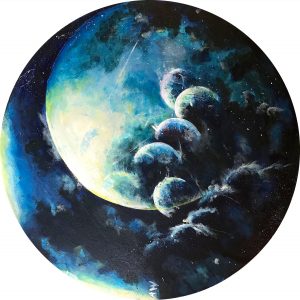 DAU—Are you the only artist in your family?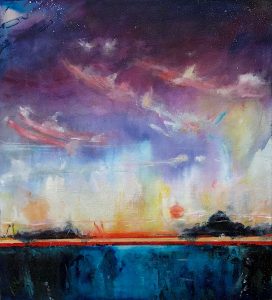

 DAU—Tell me about that.
 DAU—It’s probably a different feeling for artists than writers, but I hope my work will stand on its own, but I also feel like I need to explain it.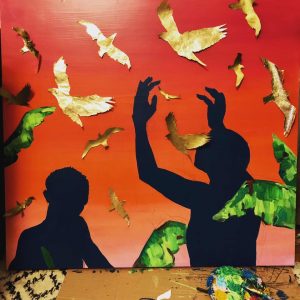
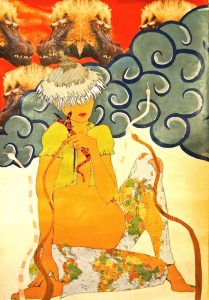
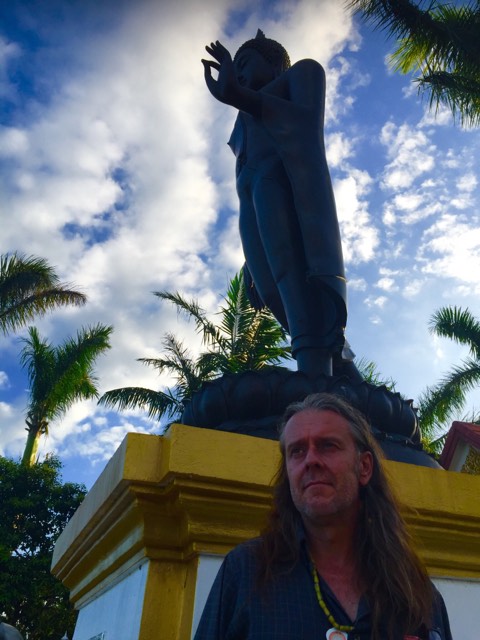
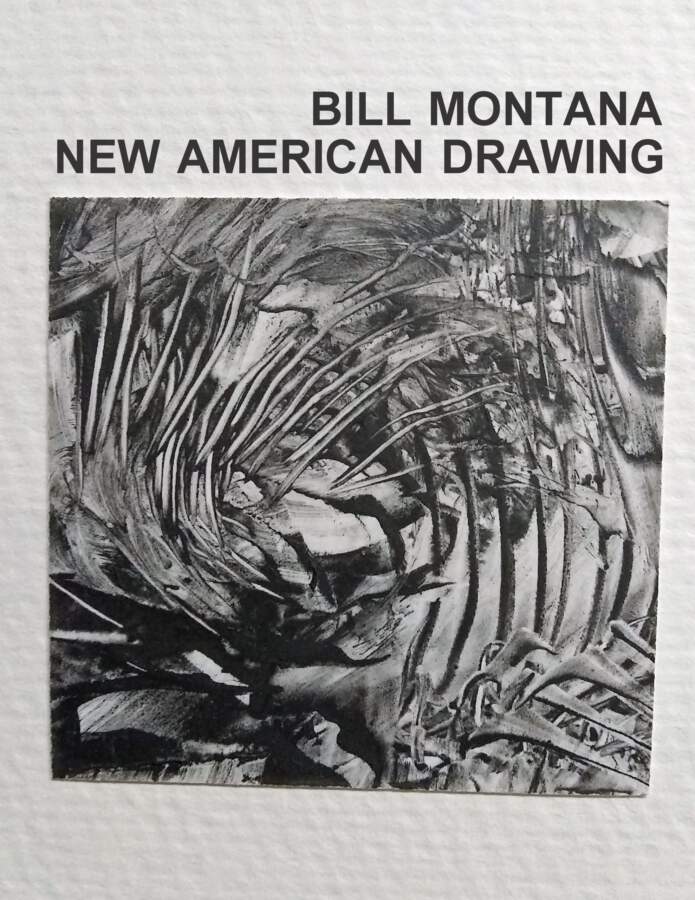 DAU—I’m hearing that you don’t like to be told what to do.
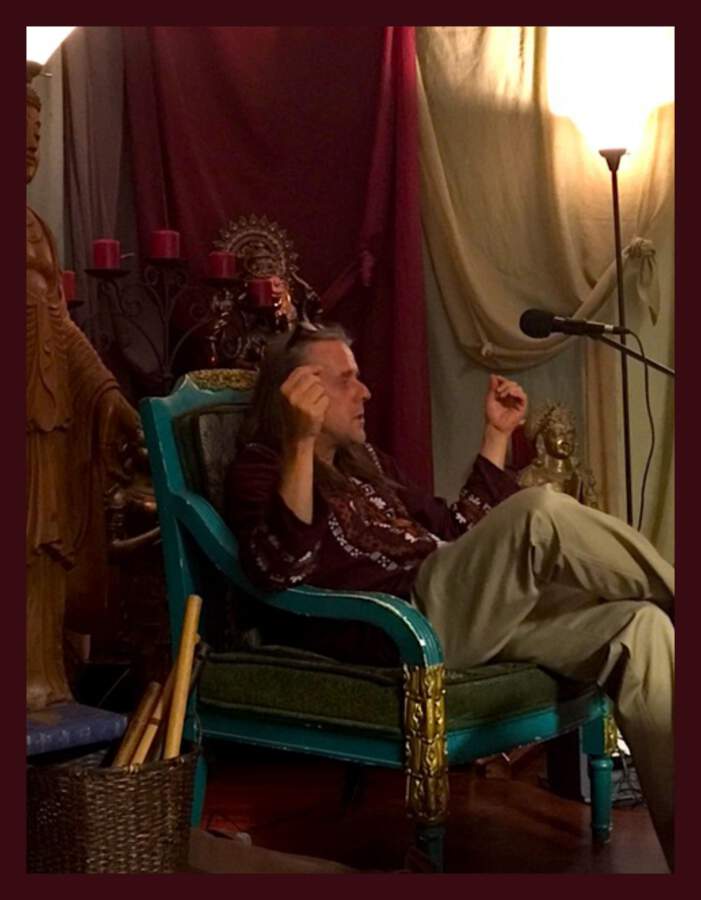
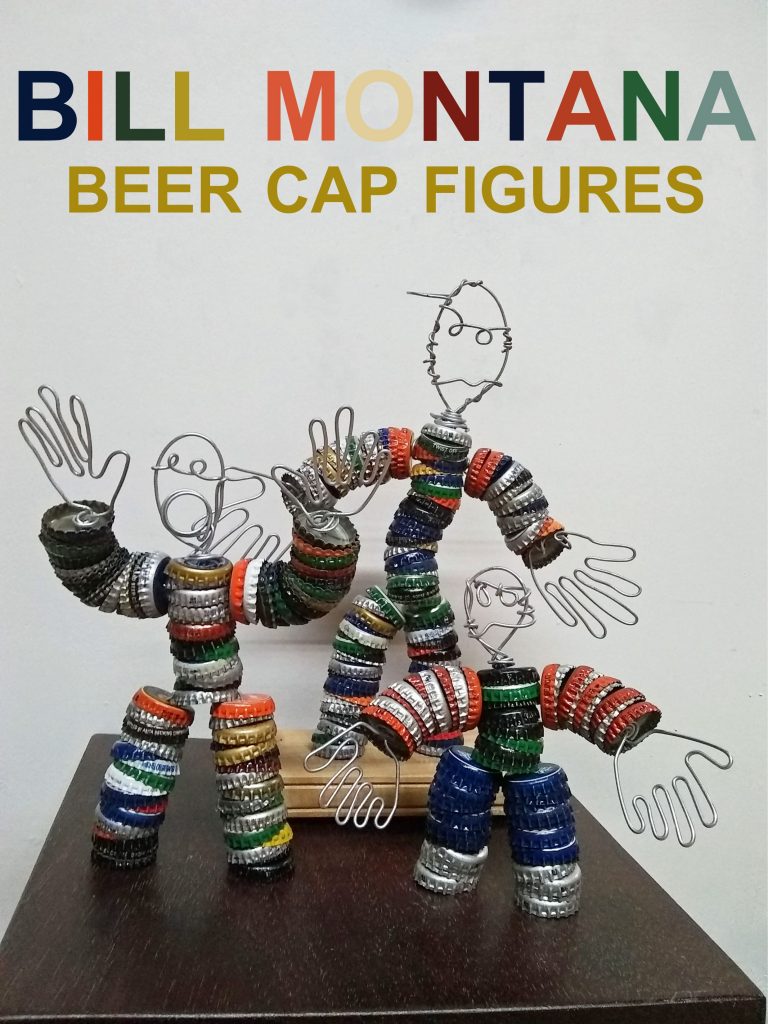 DAU—But, just a bit of argument here. Sometimes people want something that is just pretty, and maybe matches their couch.
 The Blue Heron Trio is a jazz band in Dayton, Ohio. Elisha Frontz is their vocalist, Phil Myers plays saxophone and guitar, and Dave Santucci is on keyboard.


 DAU—Last Question—What has been your favorite gig so far?
 DAU–and if someone wanted to get your cd, they would …

 DAU—What is your favorite Metropark and why?
 DAU–Dayton and the Five River’s Metroparks are working to make use of Dayton’s rivers. Have you ever boated down the Miami?
  Dayton Artists United Interviewed Artist Ben Baugham at Ghostlight Coffeehouse, where he currently has work on display.
 DAU—Congratulations! An award-winning artist! And you’re a musician too, from a family of musicians.
 Cydnie Deed-King is a visual artist, mother, teacher and gallery curator. She grabbed a coffee with Dayton Artists United to talk about art and being an artist.
 CDK—I have let go about 100 pieces. My husband reminds me that there are very famous, revered artists that never sold a work, or only one work in their lifetime. Being an artist has all these things attached to it. When you tell people, you are an artist you can see them thinking “You won’t be famous until you die.”
 DAU—This article doesn’t go online until after Jan 11th—how long will the works be on view?

 Yetunde Taiwo Rodriguez is a textile artist and designer. Her medium of choice is block printing. She says “this work is directly connected to who I am as a person. I would design blocks, carve, print, and sew even if I never sold another piece.
 YTR: Yes. No. I have a degree in graphic design, but when I got out of college, I took the first job I was offered, in customer service, and it kind of put me in a path I didn’t plan. I haven
 DAU: Talk to me about being an artist in Dayton.
  YTR: I think Gem City Market will make a big difference to the west side. I have just been looking at the city. I drove a woman around, an architect who just moved here. I was showing her the city, talking about the different neighborhoods and all that Dayton has to offer. I think showing the city to someone else really helps me appreciate what we have. You go on day to day, working, running from one thing to the next and you don
 Best-selling author and award-winning publisher, Valerie J. Lewis Coleman serves experts and professional speakers to magnify and monetize their message by publishing quality books. With over fifteen years of experience in the book business, she helps aspiring authors navigate the mysterious labyrinth of self publishing to leverage their expertise and make money.
 My first book, Blended Families An Anthology, released in 2006. Published to provide biblical principles and practical tools for struggling stepfamilies, this book has transformed marriages in several countries, been #1 on Amazon.com and topped several other best-sellers’ lists.
 Oh, The Things I Can Be When I See Me is my first children’s book. Based on conversations with my granddaughters, this picture book provides examples of historical pioneers and modern-day trailblazers who have done what they hope to do and look like them.
  I serve authors to achieve the same success my clients and I experienced: national—and sometimes, international—exposure, media attention and of course, increased book sells. At the time of this posting, I published 134 authors; more than half are best-sellers, and mentored thousands in various aspects of the book business. My services cover a spectrum to meet clients’ needs:
 DAU—Samantha Mang, tell me about yourself.
 DAU–So, how did you come back to art?
  DAU–In your copious free time? Aren’t you also on the board for ARTfest?
 J. E. Irvin grew up in Struthers, Ohio, in the industrial north area of the state. The oldest of seven children, she spent her childhood caring for her siblings and reading her way through the shelves of the local library. She completed her undergraduate BA at Ohio University, earned an M.S. in Education from the University of Dayton and an M.A. in Spanish from the University of Cincinnati. Her stories have won numerous awards and appeared in a variety of print and online publications. A career educator, Irvin taught high school for 38 years and served as adjunct faculty in Spanish at Wright State University for four years. Her interests include canoeing, gardening and travel.
 JI – It’s interesting you should ask that. When I finish a book, the characters reside in me like beloved family members who show up at Thanksgiving dinner to provide an update on their lives. There are some who never come back home. Others insist there is more to tell. In the case of the protagonist from
  students who owed lunch debts. The report left me in tears. As a teacher and a mother, I couldn’t bear the thought of children going hungry or being shamed because their parents couldn’t or wouldn’t pay the bill. I lamented this to my husband, who quite calmly told me,” Do something, Jan.” I wondered if this problem existed locally. I found out that some districts receive federal funds to provide breakfast and lunch for their students, so they may not need food assistance. But those schools may need things like socks and shoes. As I contacted the district where I live and surrounding communities, I learned that, indeed, this was a huge problem, even in those areas seen as affluent. I created a group called “Take A Kid To Lunch” and asked my social media friends to join me. We now have over fifty members, two districts have set up donation accounts, and more are being contacted. The group will remain anonymous (no actual contact with the children). Speed and efficiency is more important than tax deductions, so I didn’t set up a non-profit. Donors send what they can to the schools. It is a quick way to make sure children are not humiliated and that they get to eat. For more information, contact me at
 encourage local authors. Five years ago I proposed to the
  JI-I guess the questions I would most like to answer revolve around the issues raised in the books. I love a good discussion. Not all the issues I raise are resolvable in an absolute sense. Why do I use children and teens as heroic figures in my stories? Because, as a teacher, I witnessed the resilience, hope, and strength of young people, and I want to believe that their journeys, as dark as they may be, mean goodness and truth will prevail in the end.

 JR –I don’t know. I do these birds, you know. My mom was birder, like a real birder that would get up and go out at like 3 in the morning trying to spot a particular bird. In the memory care where she is now they have an aviary, and there is one particular bird she likes. I took some pictures of it and painted it for her. My thoughts are of her when I paint birds. And my dad was an artist. He gave it up because of a thing with his parents. His mom used a painting he gave her as a drop cloth when she painted her house. She was not a nice woman. He never painted again. But he doodled, and some of his doodles find their way into my work.