
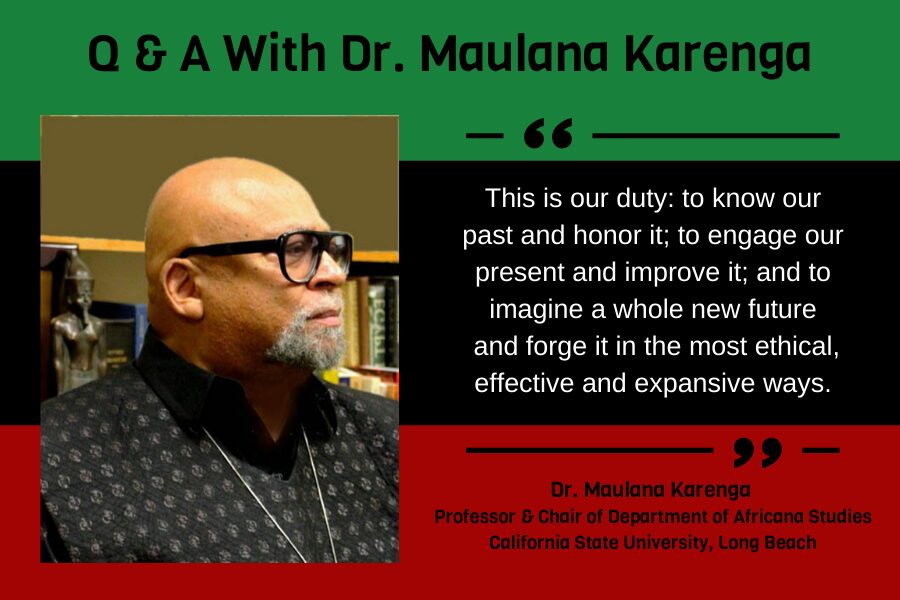
 Kwanzaa is a relatively modern holiday that began just over 50 years ago, started in 1966 by Dr. Maulana Karenga.
In the years since, Kwanzaa has grown more popular and has been commemorated with postage stamp designs and mentions by several American presidents as part of their holiday greetings.
However, if you don’t celebrate Kwanzaa, you may not know the traditions or the philosophy that are important to its meaning and celebration.
Here are seven things to know about Kwanzaa.
Why and when it was created
Kwanzaa was created in 1966 by Maulana Karenga, a black nationalist who became a college professor. He created the holiday in the aftermath of the Watts riots in Los Angeles as an effort to unite and empower the African-American community, and it was first celebrated that year.
The origins of its name
Inspired by traditional harvest festivals, Kwanzaa takes its name from a Swahili phrase, “matunda ya kwanza,” which means “first fruits.” Over 2,000 languages are spoken in Africa, so Swahili, which is spoken by millions, was chosen since it’s a unifying language. An extra “a” was added to the end of the original word because seven children each wanted to represent a letter at the first Kwanzaa celebration.
Who can celebrate Kwanzaa?
Because it’s celebrated from Dec. 26 to Jan. 1, some people assume that Kwanzaa is an alternative to Christmas. It’s a cultural celebration that has a spiritual quality, but the holiday is not a religious one. Although it celebrates African culture, people of any race or ethnic background can participate in the holiday’s events and customs.
Why it lasts for seven days
Each of the seven days of Kwanzaa is dedicated to a principle, which gives each day a specific meaning and purpose on which to focus. The seven principles are unity, self-determination, collective work and responsibility, cooperative economics, purpose, creativity and faith.
The colors of Kwanzaa
The colors of Kwanzaa are black, red and green, and they’re used to represent unity for people of African descent worldwide. Black represents the people, red for the noble blood that unites them and green for the rich land of Africa.
The meaning of the candelabra
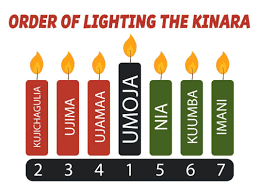
A seven-branched candelabra called a kinara is used to help discuss and celebrate the principles, with a new candle being lit each night. One is black, three are red and three are green, and the black candle is placed in the center. The black candle, which represents unity, is lit on the first day of Kwanzaa. Red candles are placed to the left and green to the right and are lit in that order. The order of the candles indicates that the people come first, followed by the struggle and then hope.
The importance of food
Food is an important part of many holidays, and Kwanzaa is no exception. Many people celebrate with their favorite African-American dishes – along with traditional African, Caribbean and other appropriate recipes – throughout the week. The holiday culminates with a feast (known as Karamu) on Dec. 31, with dishes meant to symbolize the past as well as the current growth of African cultur
