 Five outstanding individuals/groups will be inducted into the 2024 Dayton Region Walk of Fame: The Breeders, Clay and MaryAnn Mathile, Idotha “Bootsie” Neal, The Osborne Brothers, and G. Douglas Talbo . “I’m thrilled to announce that this year’s inductees come from an astonishing array of backgrounds,” exclaimed Harry Seifert, President of Wright Dunbar, Inc. “These remarkable individuals have left an indelible mark on the greater Dayton community and beyond, and their stories are nothing short of extraordinary.”
The nominees were selected based on their contributions to the region, the nation and the world, and the impact they made over many years:
 ● The Breeders ○ Kim and Kelley Deal, of Huber Heights and Dayton, are twin sisters who formed the core of the influen al alterna ve rock band The Breeders. After Kim’s success as bassist/vocalist with Pixies, she formed The Breeders in 1988. Her sister Kelley joined in 1992, becoming the lead guitarist and backing vocalist. Together, the Deal sisters, Josephine Wiggs, and Jim MacPherson defined The Breeders’ signature sound of raw energy, catchy melodies, and harmonized vocals. Their breakthrough came in 1993 with the cri cally-acclaimed album “Last Splash” and hit single “Cannonball.” The Breeders became one of the leading and most unique bands of the 90s alterna ve rock scene.
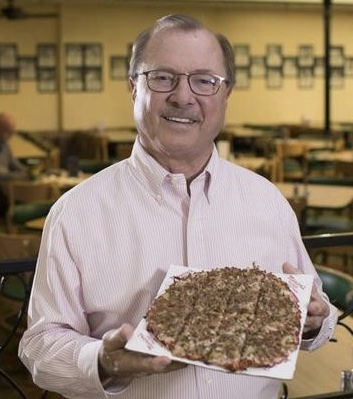
●  Clay and MaryAnn Mathile ○ Clay and MaryAnn Mathile are celebrated philanthropists and business leaders. Clay Mathile, born in 1941 in Ohio, graduated with a business degree from Ohio Northern University. He joined The Iams Company in 1970, becoming CEO and transforming it into a global pet food leader before selling it to Procter & Gamble in 1999 for over $2 billion. MaryAnn Mathile, has been his partner in business, philanthropy and in life.
Together, they founded the Mathile Family Foundation, Aileron and The Glen at St. Joseph. In total, the Mathiles have donated more than $500 million to alleviating poverty and improving the quality of life in our community. Renowned for their generosity, Clay and MaryAnn have received numerous accolades for their philanthropic work, leaving a lasting legacy of social responsibility and positivesocietal impact.
●  Idotha “Bootsie” Neal ○ Idotha “Bootsie” Neal was a pioneer who made history as the first African American woman elected to the Dayton City Commission. She advocated for underserved communities, social justice, and economic development, focusing on initiatives around education, healthcare, housing, jobs, poverty, and discrimination. Neal’s leadership and public service were widely respected, paving the way for future African American women in civic roles. Her legacy inspires engagement in public service and more equitable communities.
● The Osborne Brothers ○ Bobby and Sonny Osborne were pioneering 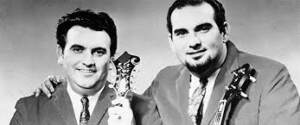 bluegrass musicians who formed the hugely influen al Osborne Brothers duo. Blending tradi onal bluegrass with country and rockabilly, their dis nc ve sound produced iconic hits like “Rocky Top.” Sonny’s vocals and mandolin paired with Bobby’s banjo skills made them trailblazers inducted into the Bluegrass Music Hall of Fame. The Osborne Brothers left an enduring legacy through their innova ve ar stry, advancement of the genre, and dedication to preserving American roots music traditions.
● 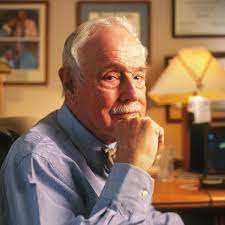 G. Douglas Talbott ○ Dr. G. Douglas Talbott was a pioneering physician who made transformative contributions to trea ng alcoholism and substance abuse disorders, especially among medical professionals. In the 1950s he was a captain in the Air Force and Chief of Medicine at Wright Patterson Air Force Base in Dayton, Ohio. He began his work here with the Na onal Aeronau cs and Space Administra on (NASA) to help select suitable crews for the Mercury, Gemini and Apollo space programs. In the 1960s he founded and became Director of the Cox Heart Ins tute, a na onally recognized cardiac research ins tute. After an accomplished career as a cardiologist, he established the first treatment program tailored for addicted physicians and became a leading advocate for recognizing alcoholism as a disease. His comprehensive approach to addiction treatment set new standards.
The inductees will be recognized at the annual Dayton Region Walk of Fame luncheon which will be held on October 15, 2024 at Sinclair Community College. Tickets for the event are now available online.
The actual engraved stones on the Walk of Fame will be installed after the event.
 Since its inception in 1996 as a part of the City of Dayton’s bicentennial celebration, the Dayton Region Walk of Fame has recognized individuals and groups for their outstanding and enduring personal or professional contributions to the community, nation and the world. The Walk of Fame honors them by setting memorial stones in the sidewalks of Dayton’s historic Wright Dunbar District. The stones can be enjoyed year-round on West Third Street between Broadway and Shannon and on North and South Williams Streets.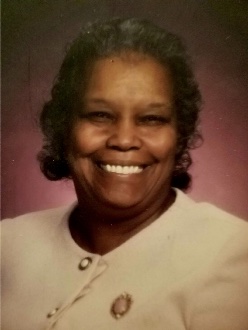


 The Walk of Fame Class of 2020 offers a first-class mix of individuals with outstanding achievements in the categories of Arts, Culture, Education, Invention, Science, Military, Community Service, Significant Personal Achievement, Entertainment, Media and Philanthropy. The Class of 2020 will be inducted this year due to the pandemic restrictions last year.
  Hallie Quinn Brown (1850 – 1949) an educator, author, elocutionist, historian, civil rights reformer and women’s rights advocate during the late nineteenth and early twentieth centuries. The daughter of former slaves, Brown attended Wilberforce University graduating in 1873. She became a teacher and later became a dean at Allen University and the Tuskegee Institute. After attending the Boston School of Oratory, she became an accomplished speaker, travelling nationally and internationally to speak on topics of African-American Folklore and Song to Civil Rights and the Temperance Movement. For ten years Brown served as professor of elocution at Wilberforce University and was a leader in fundraising for the college. She helped to establish the National Association of Colored Women where she served as president for four years and as honorary president for the remainder of her life. Brown also served as president of the Ohio State Federation of Women’s Clubs for seven years. The Hallie Q. Brown Community Center in St. Paul, MN is named for her as is the library at Central State University. Ms. Brown is buried at Massie’s Creek Cemetery in Cedarville, Ohio.
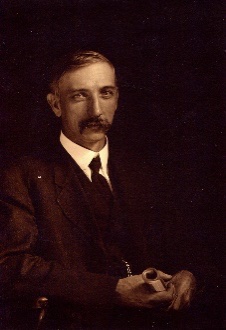
  William Hale Charch (1898 – 1958) inventor and scientist who gave us one of the most innovative food storage creations of the twentieth century: moisture proof cellophane. The cellophane Charch invented was a translucent natural plastic film made to protect and preserve food from air, moisture and bacteria, thereby revolutionizing food storage, safety and cleanliness. Working for the DuPont Corporation, Charch tested more than 2,000 formulas before devising a workable process to manufacture the new product. By 1927, DuPont was selling more than $3.7 million worth of cellophane. During World War II, cellophane was classified as an “essential material” used for the packaging of G.I. rations. Charch then spent the remainder of his career at DuPont contributing to the development of Teflon, Orlon, Dacron and Lycra. William Hale Charch was born in Dayton, graduated from Stivers High School, earned a Bachelor’s degree in Chemistry at Miami University and a Doctorate’s degree in Organic Chemistry from Ohio State University. Mr. Charch is buried in Woodland Cemetery and Arboretum in Dayton, Ohio.
  Mike DeWine (1947 –
 John Legend (1978 –
 William H. Pitsenbarger (1944 – 1966) Airman First Class, USAF. Born and raised in Piqua, Ohio, Pitsenbarger tried to enlist in the U.S. Army as a Green Beret during his junior year of high school but his parents refused to give their permission. After he graduated from high school, he joined the Air Force and in 1962 found himself on a train bound for Air Force basic training. Airman Pitsenbarger volunteered for Pararescue and was trained and assigned to the Rescue Squadron based at Hamilton AFB, California. He served a temporary duty in Vietnam and then volunteered to return. Pitsenbarger received orders in 1965 to report to the 38


 Wright Dunbar, Inc. is accepting nominations for 2019 inductees to the Dayton Region’s Walk of Fame, officials announced on Monday, Feb. 4.The Walk of Fame honors individuals or groups from the Dayton region who have spent a significant amount of time in the region and have made an enduring impact on the local community, the region, the nation and/or world. The Walk of Fame honors them by setting memorial stones in the sidewalks of Dayton’s historic Wright-Dunbar District. The 2018 inductees were Hannah Beachler, motion picture production designer; Julia Reichert, filmmaker; Richard DeWall, M. D., medical device inventor; Lucius and Dora Rice, Dayton Police sergeants; Robert C. Koepnick, sculptor, and U. S. Army Maj. Gen. George Crook, a Civil War veteran and civil rights advocate.
 In 2017 a Walk of Fame mural designed by artist James Pate that highlights several inductees was added to Wright Dunbar . Located on the southwest corner of West Third and South Williams, the mural faces the Dayton Aviation Heritage National Historical Park’s headquarters and the Wright Dunbar Interpretive Center.
