• Skip to primary navigation
  • Skip to secondary navigation
  • Skip to main content
  • Skip to primary sidebar
  • Home
  • Event Calendar
    • Submit An Event
  • About Us
    • Our Contributors
    • Subscribe
  • Advertise
  • Contact Us
  • Where to Pick up Dayton937
  • Arts & Entertainment
    • Art Exhibits
    • Comedy
    • On Screen Dayton
    • On Screen Dayton Reviews
    • Road Trippin’
      • Cincinnati
      • Columbus
      • Indianapolis
    • Spectator Sports
    • Street-Level Art
    • Visual Arts
  • Dayton Dining
    • Happy Hours Around Town
    • Local Restaurants Open On Monday
    • Patio Dining in the Miami Valley
    • 937’s Boozy Brunch Guide
    • Dog Friendly Patio’s in the Miami Valley
    • Restaurants with Private Dining Rooms
    • Dayton Food Trucks
    • Quest
    • Ten Questions
  • Dayton Music
    • Music Calendar
  • Active Living
    • Canoeing/Kayaking
    • Cycling
    • Hiking/Backpacking
    • Runners

Dayton937

Things to do in Dayton | Restaurants, Theatre, Music and More

  • Facebook
  • Twitter
  • YouTube
  • Instagram
  • Pinterest

belgian beer

The Affligem Pouring Kit or: How I Learned to Stop Worrying and Love Being a Sell Out

June 1, 2013 By Max Spang Leave a Comment

The Affligem Pouring Kit

If you have a blog long enough, people will hit you up about all kinds of things: events, guest posts, “affordable marketing”, “long term SEO options”, and a whole bunch of other stuff that you will tend to ignore. However, I recently got an email that I didn’t ignore. It was from Affligem, a Belgian brewery that has apparently been making beer for 950 years, though I had never heard of them. They offered to send me one of their pouring kits free-of-charge. Me being the snob that I am, I am skeptical of any brand of beer that I haven’t heard of, much less one that has enough cash to send free stuff to me for my little dog-and-pony articles. But I’m not so snobby that I’d turn down a free Belgian Blond (or Blonde). Heck, most of the Belgian Blondes I’ve encountered charge by the half-hour. So, I decided to be a complete sell-out and write about their pouring kit. Street cred be damned.

Affligem Kit in the MailI opened my package to find a large Belgian chalice, an adorable little glass, a wooden serving tray, and a bottle of their Blond. I ignored the fact that had zero verification to see if I was over 21 and decided to watch the video that explains what all this extra stuff was for. As it turns out, one is supposed to pour 90% of the beer into the big glass, then pour the remaining 10% (which has the yeast) into the little baby glass. The drinker can then decide whether to drink the beer without yeast, mix the yeast into the beer, or drink the yeast by itself. Admittedly, this gimmick is a pretty neat idea. You always hear about how you’re supposed to drink the yeast in some beers and leave it out in others, but why not have the option of both? Plus, it seems like it’s a good way to really understand what kind of flavors the yeast adds to bottle-conditioned beers. Sure, it’s not really practical to drink out of two glasses at the same time but who am I to judge? I’m drinking out of two right now (if you consider a flask and a mason jar to both be glasses, that is).

Affligem Blond is 7% ABV, and is classified as a Belgian Pale Ale. It is produced year round, and the company that produces it is owned by Heineken (which is probably why they have such a big budget and why I’ve never heard of it). And after hearing it pronounced 50 times in that video, I now know that it’s “Ah-Fleh-Ghem”, not “Ah-phlegm” like my brain kept wanting to say.

I did the whole shebang and poured the beer and yeast separately, smelled them both, tasted them both, then combined them. Here is my impression of the whole experience

Affligem BlondBlond (sans yeast)

The Blond poured a clear deep straw color, almost like a Budweiser that is about twice as dark. It was visibly effervescent and had a rather large white head that left minimal lacing. The aroma was pretty typical of a Belgian Blond; it had a lot of banana and clove, as well as some slight citrus and other sweet spice character. The flavor followed the nose pretty closely, with banana and clove being the dominant flavors. There was some cereal flavors that reminded me of corn flakes. The 7% was very well hidden, and the carbonation level was high and left a prickly feeling on the tongue. Overall, it was kind of watered down and sort of average. Tasty, but average.

Yeast

The yeast was quite a bit cloudier than the regular beer for obvious reasons. It smelled almost the same, though it was a bit more muted overall and had some nice bread character that was missing from the base beer. The taste was, as you would expect, pretty much the same though it had a bit more bitterness and less citrus. It had a lingering flavor that hung around in the mouth that reminded me of bread dough. The flavors were somewhat muted compared to the regular Blond.

Affligem Taster GlassBlond/Yeast Mixed

This was pretty surprising – this was quite a bit different than the separated elements. It was similar to the Blond without yeast, though it had a fuller flavor and, oddly enough, a bigger perceived mouthfeel. The strong flavors of the regular Blond were there, and the added bitterness and bread flavors from the yeast added complexity. The mix was by far my favorite version of the Affligem. If you were to try this beer out of the bottle, I would recommend dumping it all in rather than excluding the yeast.

Overall

This was a mildly fun learning experience. The whole thing was pretty cute, but I wouldn’t go bang down the doors of your favorite beer shop to get your hands on the pouring kit. I guess it would be cool for a classy beer bar to have one or two of these on hand. Or, maybe you could whip it out at a tasting to show people what kind of flavors are produced by yeast. Or maybe you could show it off to someone you are trying to get in the sack. Or maybe you got it for free in the mail randomly and write a blog post about it. Whatever the case, I don’t think I’ll use it other than this one time. At the very least, I’ll use the little baby yeast glass more than anything else in the kit. It holds just about enough to get a good taste of something at a bottle share. Plus, look how stinkin’ cute it is. It’s adorable! It’s like a glass for fairies or something.

I don’t want it to sound like I’m sitting here bashing Affligem for this. In fact, I think they are doing a great job with their marketing. Almost everything about what they are doing with this pouring kit is pretty impressive. It’s just a little gimmicky, and frankly kind of faux snooty. But really, I guess my point for this whole thing is that I really love getting free stuff, especially beer. So if anyone wants to send me free beer, for the love of God get ahold of me. I might even write a stupid blog post about it.

Filed Under: Dayton Dining, Dayton On Tap Tagged With: affligem, Beer, belgian beer, blond, Craft Beer, max spang, snobby beer

Fantôme Saison, A Ghostly Brew

February 8, 2013 By Max Spang Leave a Comment

Fantome Saison

Man, you remember when saisons weren’t made by tiny breweries from Vermont and made up a good chunk of everyone’s best of list? It’s like you had to go to Belgium to get a good saison, and this one from Fantôme was (and still is) one of the most highly rated examples of the style. I got this bottle all the way from Belgium via the glorious internet, cracked it open, and did what every good beer geek does; took diligent notes. This fella clocks in at 8% ABV.

Appearance

The beer is getting its sais on (get it?). It pours a lovely hazy straw color with a huge white head. The lacing was ghostly throughout the whole session. It just hung around and stared at me while I wasn’t looking at it, then would turn away as soon as I faced it like those ghosts in Super Mario World. Nerdy ghost references? I got’em. [Read more…] about Fantôme Saison, A Ghostly Brew

Filed Under: Dayton On Tap Tagged With: belgian beer, Craft Beer, fantome, Fantôme Saison, max spang, saison, snobby beer

Aging Beer Like Fine Wine

December 13, 2011 By Max Spang 3 Comments

Beer Cellar

Have you ever had a Bud or a Miller that was just a little bit too old? Perhaps someone left it in the garage during a party in the Spring, and you forgot all about it until well after Summer was over. You thought “Oh, what the heck” and cracked it open to see how it tastes.

Uh oh.

If you’ve done something like this, then you are probably scarred for life. The thought of aging beer may sound like a one-way ticket to Skunksville. However, you may be surprised to know beers, like wine, can actually mature for months, years, and even decades. You might even find the occasional bottle that has a “Best After” date rather than a “Best Before” date. The idea of sitting on perfectly good beer for months or years may sound crazy to you at first, but your patience will be rewarded in the long run.

Here are some things to think about regarding aging beers.

The Environment

The most important factor in aging your beer, also called “cellaring”, is the environment in which it will be aged. Throwing it in the garage or attic might be slightly more convenient in terms of space, but that kind of unstable environment is no good for storing beer.

Beer Cellar

Caves make great environments for beer. You know, for those of you who have an extra cave laying around

The optimum environment for beer is a cool and dark area with minimal temperature fluctuations. Light and high temperatures will do terrible things to beer over time. The optimum temperature range for most beer aging is 50-55 degrees Fahrenheit (10-13 degrees Celsius). You want the bottles to remain relatively dry but have enough moisture in the air to prevent corked beers from drying out. You also want to store your beer upright as opposed to horizontally like wine, even with corked beer. More information on why you store beer upright can be found here.

Unless you have a cave system underneath your house, this environment isn’t necessarily readily available in most homes and apartments. Fortunately, there are other options available. A wine chiller with the racks taken out can make a great spot to age beer. An extra refrigerator with a thermostat may also suffice, but keep in mind that refrigerators are very dry and may cause corked beers to dry out over time. If you have a basement, underneath your stairs or in a in a dark corner may be adequate places to age your beers. If you don’t have a basement, a small closet may be a suitable option. However, the general consensus is that if you are not in optimum cellaring conditions, you should only age beers for 2-3 years max.

Organization

Organization may not be a big concern when you first start aging beers, but after having a large random collection of unidentifiable bottles laying around you’ll learn the importance of organization. How to you go about organizing beer? That is entirely up to you. You may want to organize by brewery, style, age, or other ways.

Beer Cellar

Make sure your beers are easily-identifiable.

No matter which way you organize, you want to be able to easily identify what the beer is, who makes it, and how old it is.

If you have the space and can afford it, shelving units are some of the best and easiest ways to organize your beer. Just set up a few shelves, and stack the beers with the labels face-out.

You may also want to put dates on the beers that don’t have the “Bottled On” date printed on the label. I personally write the dates on strips of paper, then stick them on the neck of the bottles with clear Scotch tape. Dating bottles is important because it’s easy to lose track of the age of beers as your collection grows.

The Beer

Now that you know a little bit about storage, you can start thinking about the important stuff; the beer. There are a lot of types of beer that are great candidates for aging, and many that are not recommended to be aged. There are a few general rules of thumb regarding what types of beers should be aged:

High Alcohol Beers

Alcohol is one heck of a preservative. High alcohol beers are usually prime candidates for aging because they will remain preserved while the flavors mature over time. Generally speaking, beers over 8-9% Alcohol By Volume (ABV) can be aged for up to a few years. Beers that are much higher, closer to 15% and up, can be aged for many, many years. Not all high ABV beers are good candidates for cellaring, but this is generally a good starting point.

Bottle Conditioned/Refermented Beers

Sometimes, brewers will leave a small amount of yeast when they bottle their brews, which carbonate the beers naturally. These beers are known as “Bottle Conditioned” or “Bottle Refermented” beers. You can tell if a beer is bottle conditioned by holding it up to light and seeing the little slurry of yeast at the bottom of the bottle. Don’t be alarmed if you see this, yeast are perfectly fine to drink – though, you may want to leave the last ounce or so in the bottle as you pour so you do not affect the flavor of your beer. Bottle conditioned beers have live yeast in them, which would love nothing more than you hang out and create subtle flavor changes to your beer over time. Not all bottle conditioned beers can be aged, but it is something to look for on your beer aging quest.

Lambics/Sours

Lambics, and some other sour beers, contain a cocktail of natural yeasts and bacteria. Lambics go through what is called open fermentation or spontaneous fermentation, meaning only natural yeasts and bacteria from the surrounding area are used to ferment the beer. Lambics are considered one of the best beers to age, and many Lambic enthusiasts may argue that they will only get better with time. Generally low in alcohol, these sour beers rely on the living organisms that are contained in the bottle to keep them preserved. Their aging potential is extraordinary – I have read about lambics being aged for over 40 years and still tasting amazing! Other sour beers, such as American Wild Ales, contain many of the same bacteria and natural yeast as Lambics, and will continue to mature as the years go by.

Recommendations of Beers to Age

Not sure where to start? Here’s a few recommendations of beers to grab and age.

Sierra Nevada Bigfoot

Sierra Nevada Bigfoot. Buy a sixer - drink some now, some later.

Sierra Nevada Bigfoot
An American Barley Wine, Sierra Nevada’s Bigfoot is released once a year in January. The bottle has the year printed right on the cap, which is handy for organization. They sell this beer in six-packs, which gives you the opportunity to easy get a collection started. The beer is very hop-forward when it is fresh, and will mellow out and become much smoother over the years. This is perhaps one of the easiest beers to grab to start your cellar.

Stone Vertical Epic Beers
These beers from Stone are all designed to be aged and enjoyed “Sometime beyond 12.12.12”. The first release of this beer was 02.02.02, and there have been releases every year since (03.03.03, 04.04.04, and so on). Stone has recently released the 11.11.11 batch, which contains a Flanders yeast, chillies, and cinnamon. Grab two bottles of any that you find – one to drink now, and one to drink after 12.12.12. They are generally Belgian-influenced, and each of them has their own style-defying “twists”.

J.W. Lees Harvest Ale
Probably one of the most commonly aged beers, this English Barley Wine comes in at a heft 11.5% ABV. It’s a big, chewy, and sweet beer that will change slowly over time. Vintage bottles of this ale are fairly easy to find (I recently grabbed a 1999 off the shelf!). This is one of those beers that can pretty much be aged for decades, and it’s not uncommon to hear about people sampling vintages of this beer from the 1980s. Barrel-aged versions of this beer are also available.


St. Bernardus Abt 12

St. Bernardus Abt 12. A great Quad from Belgium that is perfect for aging.

St. Bernardus Abt 12
The label on this bottle-conditioned Belgian Quad claims that the beer can be aged for up to 15 years. Known as one of the best and most widely available Trappist Quads, the beer has notes of dark fruits, caramel, and spice notes from the Belgian yeast strain. It is available all year round at finer bottle shops.

Some other styles that are usually good candidates for aging: Geueze, Imperial Stout, Barley Wine, American Wild Ale, Old Ale, Belgian Strong Dark Ale, Quad, Braggot, Flanders Red Ale, Wheatwine, etc.

Note: There are a few styles of beer that you do not want to age.  These include Pale Ales, IPAs*, and other hop-forward styles, as well as low ABV beers such as Berliner Weiss, Wits, Wheat Beers, etc.

*Some beers labeled as IPAs can potentially be aged, I.E. Dogfish Head’s 120 Minute IPA, Founders Devil Dancer, Dark Horse Double Crooked Tree, etc.

Cheers.

For more information, beer reviews, home-brewing banter, and more, check out Snobby Beer.

Filed Under: Dayton On Tap Tagged With: abt 12, aging beer, aging beer like fine wine, aging beer like wine, barley wine, Beer, beer cellar, belgian beer, bigfoot barley wine, bottle conditioned, cellar, Craft Beer, how to age beer, how to cellar beer, imperial stout, j.w. lees, jw lees, lamibc, max spang, quad, quadrupel, SIerra Nevada, sierra nevada bigfoot, snobby beer, st bernardus, stone brewing, stone vertical epic

Tröegs Mad Elf – Snobby Beer Reviews

November 28, 2011 By Max Spang 3 Comments

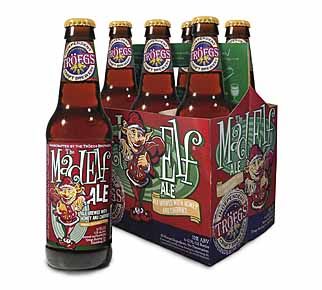
Troegs Mad Elf Beer. It’s a wonderful combination of barley, hops, water, and yeast. These four ingredients can produce a huge variety of styles of beer, from refreshing Lagers to chewy Imperial Stouts. There are beers for every occasion. Beer is something enjoyed by a diverse group of people. Beer is something you can make at home. It can be cheap, and it can be expensive. It can be widely available, and it can be extremely rare. If you’ve read this far, then you probably can agree: beer is awesome.
Now that it’s almost December, seasonal brews have shifted from Oktoberfests and Pumpkin Ales to Winter Warmers and Spiced Ales. These seasonal beers are among my favorite styles, if for no other reason than they just feel special. I decided to share my review for one of these beers as my first review on Dayton Most Metro.

Enter: Mad Elf from Tröegs Brewing Co. in Harrisburg, PA.

From the Tröegs Website:

The Mad Elf, a cheerful creation to warm your heart and enlighten your tongue. The combination of Cherries, Honey, and Chocolate Malts delivers gentle fruits and subtle spices. Fermented and aged with a unique yeast, this ruby red beer has significant warming strength that underlies the pleasant character of this intriguing yet delicious Ale. The Mad Elf, a jolly and delicious beer for the Holidays.

My review for this beer:

Troegs Mad Elf 2011

Troegs Mad Elf 2011

This beer is 11% Alcohol By Volume, and 15 IBUs (International Bittering Units).

Served in a Christmas tulip!

APPEARANCE

This Elf is a lovely deep copper-red color and is more translucent than expected. The head was about a one finger khaki color, and dissipated in a hurry – none of it remained. It looks like a lovely brew! I feel like the cherries were added to give it a good amount of color, but not so much on the flavor (more on that later).

SMELL

There is some definite big Belgian yeast/spice character coming through. Surprisingly, alcohol isn’t that present. There is a lovely honey aroma, but not a lot of the cherries. There’s a good bit of raisin bread character, and the Belgian spiciness is met with some dark fruitiness. It smells fantastic and inviting.

TASTE

Yum – this is a big bad beer. There’s a lot of chewy bread-like character, and some wonderful dark fruit character. The sweetness is definitely high, but not cloying. The honey comes through at the back of the tongue and hangs around for a little while after the swallow. The cherry flavor is present, but it’s not very noticeable. The Belgian spiciness is a nice addition to to overall flavor, but isn’t the focus of the beer. Alcohol? Schmalcohol, this beer doesn’t appear to have the stuff.

MOUTHFEEL

This Elf starts off big and chewy, and feels slightly syrupy (the good kind of syrupy). At the end, there’s a bit of dryness that ups the drinkability. It’s nice and warming after each sip, and even though you can’t taste the alcohol, you can feel it! There isn’t much carbonation to speak of, which works well in a thicker beer like this. The beer is pretty drinkable, yet it demands to be savored.

OVERALL

This beer is excellent. This is definitely not a beer to drink every night, but is great for cold winter nights. It doesn’t have as much spice character as other Holiday beers, but is a MUST for this time of the year. I don’t know what made the Elf Mad, but this beer makes me very happy. Due to the high ABV of this beer, it’s a prime candidate for aging in your basement or cellar. Plus, I love the fact that they sell it in a variety of ways – 22 Oz Bombers, 12 oz. Singles, and even six-packs instead of four-packs! It gives you the opportunity to buy a sixer, drink a few, then age the rest.

This beer is available at fine bottle shops in Dayton, such as Belmont Party Supply, Arrow Wine & Spirits, Liquor & Wine Warehouse, and more. They should also be available at your favorite craft beer bars – but get them fast before they sell out!

Cheers.

SCORE: ★★★★ 4/5

This and other reviews can also be found at Snobby Beer.

Filed Under: Dayton On Tap Tagged With: Beer, beer review, belgian beer, christmas beer, Craft Beer, mad elf, max spang, snobby beer, snobby beer reviews, troegs, troegs mad elf, winter beer, winter warmer

Primary Sidebar

Submit An Event to Dayton937

Join the Dayton937 Newsletter!

Trust us with your email address and we'll send you our most important updates!
Email:  
For Email Marketing you can trust
Back to Top

Copyright © 2025 Dayton Most Metro · Terms & Conditions · Log in