A major developer in Downtown Dayton’s renaissance recently acquired several buildings in and near the Oregon District. Woodard Development, which has completed major projects throughout downtown and Webster Station including both adaptive reuse and new construction, will upgrade and re-activate properties and bring new amenities to the neighborhood.
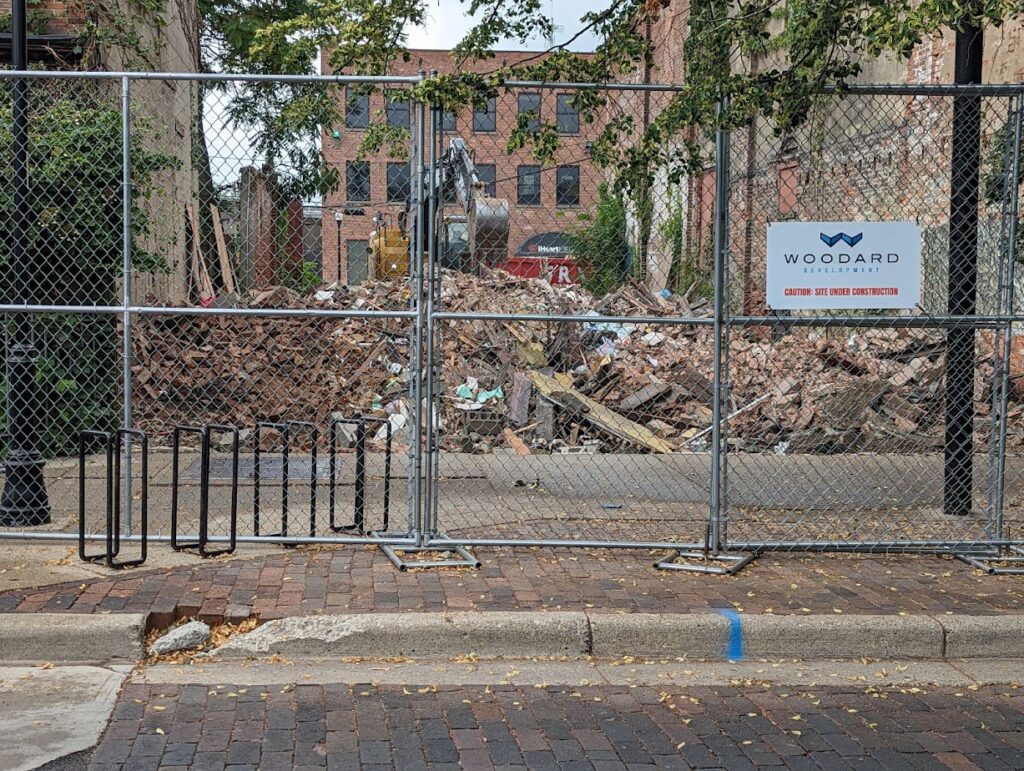
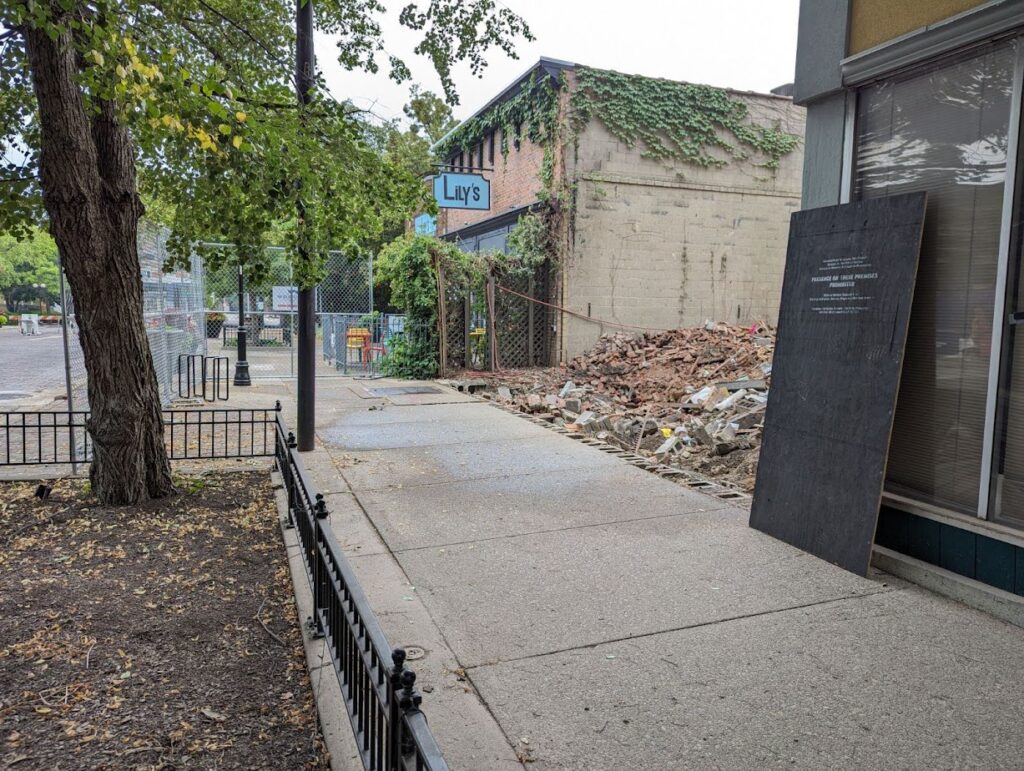
One building, unfortunately, was unable to be saved and has just been demolished.
Buildings purchased by Woodard include the Johnston (513-23 E. Fifth) and Schaefer Buildings (601-613 E. Fifth), which are currently occupied and will see upgrades to the apartments. The Schaefer, which has storefronts on both Fifth and Wayne Ave, has numerous commercial tenants including Corner Kitchen, Press Coffee, Heart Mercantile, Luna Gifts & Botanicals and Puff Apothecary. The Johnston houses Clash Dayton.
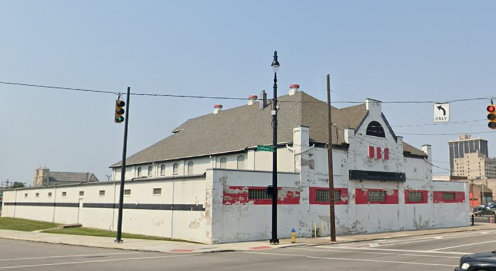
Vacant structures on Fifth Street bought by Woodard include 337 and 343 E. 5th St. which are the two buildings next to Lily’s Bistro. And the most interesting acquisition is the former United Business Service building at 505 S. Jefferson Street near Patterson Boulevard and US-35 just beyond the historic neighborhood.
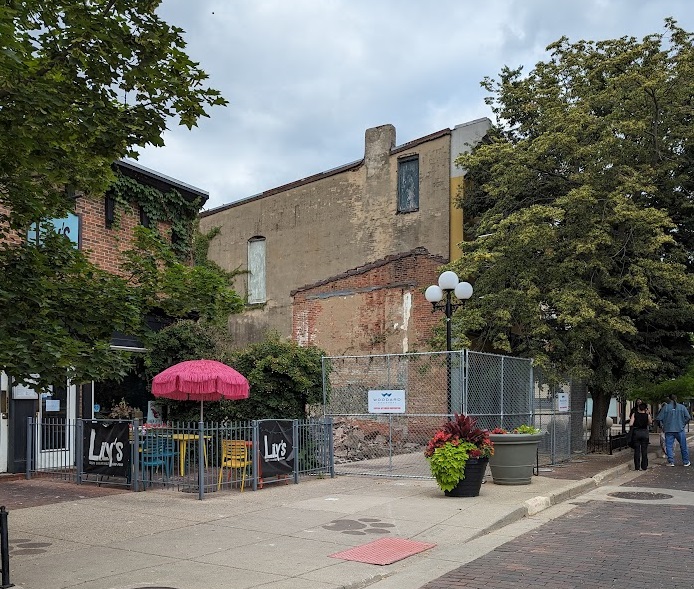
The building that was demolished is the one just next to Lily’s.
At the time of purchase, Jason Woodard said that “the wall closest to Lily’s is caved in; it’s past saving. The city declared it an imminent threat. We closed on it knowing that smaller building will come down.”
An inspection by Dayton’s chief building official concluded it was in danger of collapsing, and Tony Kroeger, Dayton’s planning division manager, said that “the conditions of the building compel the city to approve the demolition of the property.”
A letter to Oregon District neighborhood said that “demolition in historic districts is an option of last resort, but this project will replace an unsafe structure with an attractive and active courtyard.”
The lost structure at 337 E Fifth Street (as well as its neighbor 341) was constructed some time earlier than 1887.
In the early 1900s, the building was used as a hotel. By the 1950s, it was the Flex O Steel Company. The building was also connected to Dayton’s music scene which still has a presence just across the street. In 1969, 337 E Fifth was Ron’s Records and in the 1980s it was Gem City Records before that business expanded nearby to what is today Omega Music.
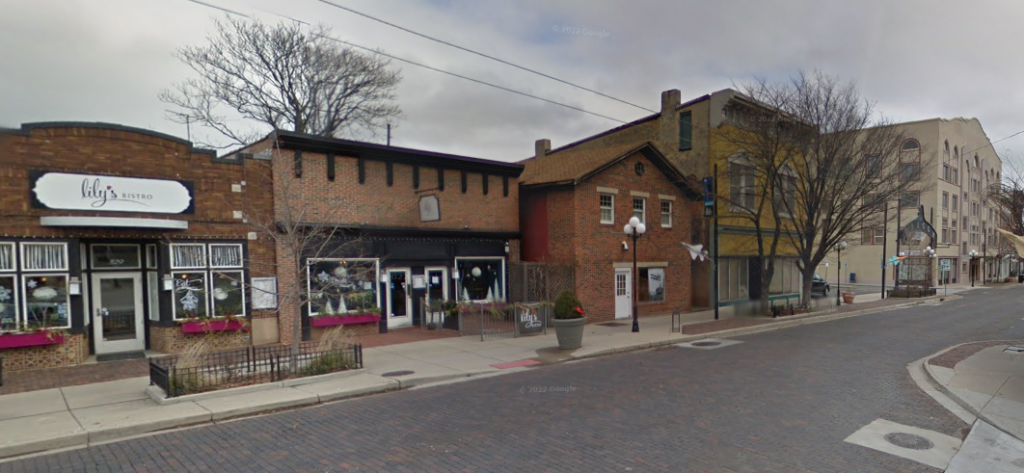
The façade of the building was heavily altered in the late 1970s to replace a crumbling and partially demolished wooden addition to the original brick structure, which was described as “an old Georgian with a square front.”
 Clipping via Newspapers.com
The goal of the alteration was to “restore the two-story structure to what it looked like in the early 1900s” but it still meant that the building did not have enough historic integrity to qualify as a contributing structure to the historic district.
Based on the inspections and reports from neighboring businesses, it’s hard to disagree with the conclusion that the building needed to come down. But it’s still a disappointing loss.
With deteriorating buildings, the debate typically scrutinizes the historic significance, or lack thereof, to decide if it “deserves” to be preserved.
But it’s not just the Dayton Arcades and Traxler Mansions that make Dayton what it is. The everyday vernacular architecture is a huge part of what why urban places are unique and special and Dayton has already lost a staggering percentage of its 19th-century building stock.
And buildings, especially in historic commercial districts, are intimately part of the context of the surrounding streetscape. Corridors lined with an unbroken “street wall” give us a pleasing sense of enclosure and act as a sort of outdoor living room for a vibrant, walkable space that people will want to spend time in.
This type of building pattern also builds significantly more wealth for their communities than suburban models of fewer buildings spaced farther out.
Coherent and connected historic business districts were once ubiquitous in all parts of Dayton but most were totally wiped off the map and the couple that remain are an endangered species with major gaps.
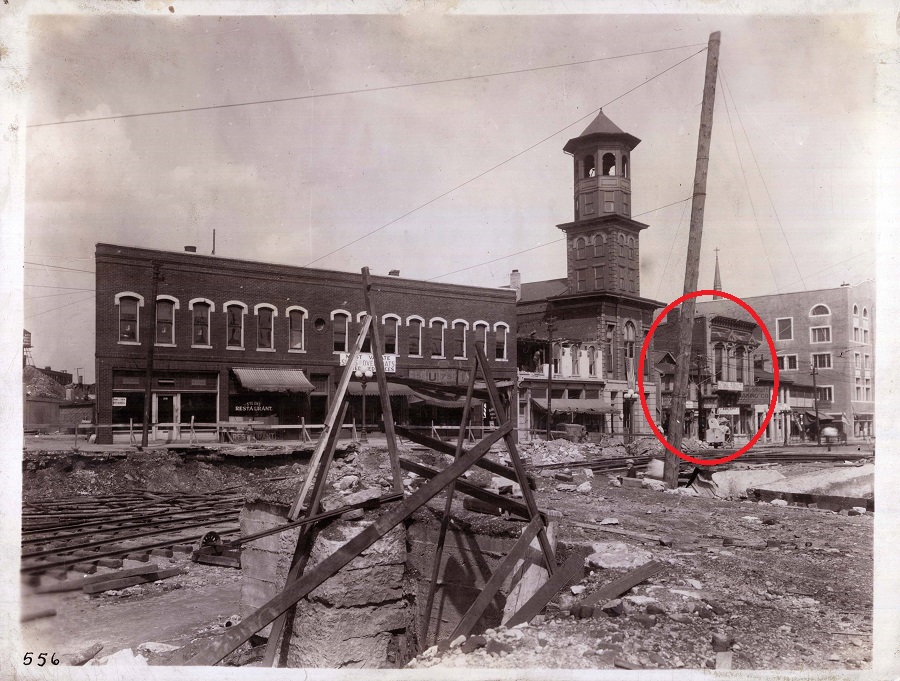
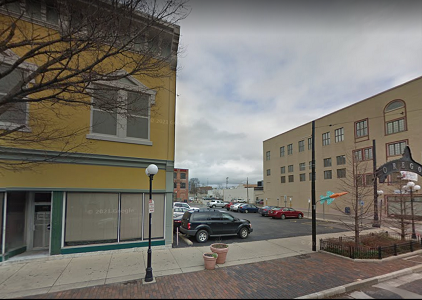
The Oregon District is considered the best-preserved neighborhood in Dayton but its signature Fifth Street already has many gaps due to previous neglect or planned demolitions of just this type of building (look no further than the sizable lot directly on the other side of the 341 building and compare to the historic image above).
It’s also worth noting Woodard’s commitment to preservation when possible, including last year when it responded to a call to preserve a historic church on Brown Street that was originally planned to be razed for a new medical building. They saved and incorporated the historic building into the new facility.
Tomorrow I’ll shift gears to this history of a newly purchased building that does survive, the former UBS building.