• Skip to primary navigation
  • Skip to secondary navigation
  • Skip to main content
  • Skip to primary sidebar
  • Home
  • Event Calendar
    • Submit An Event
  • About Us
    • Our Contributors
    • Subscribe
  • Advertise
  • Contact Us
  • Where to Pick up Dayton937
  • Arts & Entertainment
    • Art Exhibits
    • Comedy
    • On Screen Dayton
    • On Screen Dayton Reviews
    • Road Trippin’
      • Cincinnati
      • Columbus
      • Indianapolis
    • Spectator Sports
    • Street-Level Art
    • Visual Arts
  • Dayton Dining
    • Happy Hours Around Town
    • Local Restaurants Open On Monday
    • Patio Dining in the Miami Valley
    • 937’s Boozy Brunch Guide
    • Dog Friendly Patio’s in the Miami Valley
    • Restaurants with Private Dining Rooms
    • Dayton Food Trucks
    • Quest
    • Ten Questions
  • Dayton Music
    • Music Calendar
  • Active Living
    • Canoeing/Kayaking
    • Cycling
    • Hiking/Backpacking
    • Runners

Dayton937

Things to do in Dayton | Restaurants, Theatre, Music and More

  • Facebook
  • Twitter
  • YouTube
  • Instagram
  • Pinterest

prosecco

Drinking Prosecco Is Good For You

December 29, 2016 By Dayton Most Metro

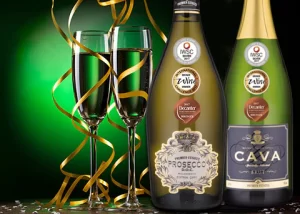
Italy is responsible for the phenomenon that is Prosecco, which, in 2013, edged ahead of Champagne in terms of bottle sold around the world (307 million versus 304 million respectively).  It is light and fizzy, delicate and fruity. Because the wines are aged in large tanks with less pressure Prosecco bubbles are lighter, frothy and spritzy with less persistence as compared to champagne.  Finer Prosecco wines often exhibit notes of tropical fruits, banana cream, hazelnut, vanilla and honeycomb.    A standard pour of Prosecco has about 121 calories and costs about $13 for a good entry-level bottle.

5 Reasons To Drink Prosecco

1. It’s Good for your heart
According to scientists at the University of Reading, drinking one glass a week of prosecco a week can lower your blood pressure and increase the circulation to your heart thanks to polyphenols, the technical name for plant chemicals with antioxidants, found in the bubbles.


2. It can aid your memory
Although you might not feel like you can remember the whole night after a couple of glasses, research suggests the bubbles, especially those found in champagne, can help reduce memory loss and fight off dementia and other degenerative brain diseases.


3.  It can boost sex life

According to a paper in the Journal of Sexual Medicine, drinking one or two glasses of prosecco before sex can heighten your libido thanks again to the antioxidants. The antioxidants increase the blood flow to your downstairs getting you in the mood. Cheers!


4. It can lower your risk of  diabetes and Cancer
A study from Canada showed that wine, including the sparkling variety, can lower your risk of developing diabetes by 13%. However, it’s worth noting that people who already have diabetes should take care while drinking alcohol as it affects their blood sugar levels.

5. Prosecco can help fight off colds

Drinking can feel like the last thing on your mind when you’ve got a runny nose and a chesty cough, but a glass of prosecco a day really can keep the doctor away. Apparently, drinking one glass of prosecco can minimise your chances of developing a cold in the first place by 60 per cent.


Cheers to good health!


Filed Under: Dayton Dining, The Featured Articles Tagged With: Health benefits of pressecco, prosecco

Popping the Cork!

December 26, 2014 By Lisa Grigsby

wThere’s no doubt that a bottle of bubbly is the perfect go-to-libation to celebrate New Year.  But how do you choose the right sparkling wine for your festivities? Probably the biggest factors are taste and budget.  If budget is no object, Champagnes like Krug, Dom Perignon and Cristal come to mind.  It’s rare to find a bottle of champagne for under $50.

Champagne is the name given to sparkling wines produced in the French region of Champagne. The name “champagne” is protected by law and can only be used by winemakers from that region. But Italy and Spain offer delicious (and less expensive) alternatives with their respective prosecco and cava.  You can pick up a great prosecco or cave for under $20.

But what’s the difference between these three sparkling wines?

The major difference is in the process of fermentation (the “bubble making process”). Champagne goes through a second fermentation in a sealed bottle. For prosecco and cava, the second fermentation is done in a large vat, also known as the Charmat method. The three wines are also made from different grape varietals: Champagne from chardonnay, pinot noir and pinot meunier grapes; cava from macabeo, parellada and xarel-lo grapes and prosecco from glera grapes.600583-1617-21

Each wine has different amounts of fizz, either frizzante or spumante. The easiest way to determine how much fizz your bubbly will have is to simply compare the corks. If the cork has a string attached to it, you’ll have light fizz (frizzante) and if you notice a wire – traditional for Champagne – then you’ll have heavy fizz (spumante).

And in general as far as taste, Champagne is rich and complex, while cava and prosecco are lighter and slightly fruitier.   And the absolute best way to determine what you like is to just taste and that’s easy to do this week, as many of our local wine shops are hosting tastings.  Here are two you won’t want to miss:

Sat, Dec 27th  –  Arrow Wine Tasting –  11am – 5pm
11am – 5pm – either store, casual drop in tasting, nominal cost per taste

Sun, Dec 29th – Dorothy Lane Market 4-6pm

For more wine events, be sure and check our MostMetro.com wine calendar.


Filed Under: Happy Hour, The Featured Articles Tagged With: cava, champagne, new year's eve, prosecco

Tasting the Stars in Champagne

February 14, 2013 By Brian Petro 18,068 Comments

“I only drink champagne when I’m happy, and when I’m sad. Sometimes I drink it when I’m alone. When I have company, I consider it obligatory. I trifle with it if I am not hungry and drink it when I am. Otherwise I never touch it – unless I’m thirsty.” ~Madame Lily Bollinger

Champagne coupe

Originally, champagne was served in glasses that looked like this.

Madame Bollinger would know the best time to drink champagne. As one of the greatest women to work in the champagne industry in the house whose name she bears, Mme. Bollinger brought champagne through the Great Depression and World War Two. She promoted a style of champagne that changed the industry, moving it from the sweeter side of the spectrum to the dry the British always seem to favor. She was the face of the Bollinger brand, an unusual position for a woman in 1941, and through her efforts, helped the city of Ay, after the war, while earning several honors from both Great Britain and France. She continued the tradition of providing the royalty of England with champagne for all of their events, but more importantly creating champagne so iconic that even James Bond drinks it.

Champagne is a drink of celebration, and is there a better time to be celebrating than on Valentine’s Day? Love is in the air, chocolates and flowers are roaming through offices and homes around the world, so why not bring out that bottle of champagne you were saving for a special occasion? And while you are enjoying your wine, enjoy some interesting facts, trivia, and quotes about this bubbly beauty.

  • Dom Perignon, considered the father of champagne, was not trying to create a sparkling drink. He was trying to demi_sec
    prevent it. The bubbles in champagne were a flaw caused by secondary fermentation. Cold stops the fermentation process, and can leave some sugar in the bottle. When spring comes back and the weather warms up, the fermentation starts up, and creates the fizz. Dom Perignon was the father of blending grapes before pressing them.
  • The grapes blended to make champagne in the modern era are Chardonnay, Pinot Noir, and Pinot Meunier.
  • Modern champagne tastes were determined by the British. Champagne was first deliberately created by a man named Christopher Merret in the mid 17th century. They liked the carbonation in their wine, though it was the French king that Louis XIV made it popular with the nobility. It was much sweeter at the time. It was the British again that demanded drier and drier champagne, giving us the general range of sweetness we enjoy today.
  • Uncorking a bottle of champagne is serious business. Before the glass was strong enough, the secondary fermentation caused bottles to explode. All of that gas with no outlet builds up pressure. It can be up to 90 PSI, just under three times what is recommended in a car tire. Plenty of pressure and a little neck, when put together, create a weapon that can shoot the cork at speeds of up to 50 MPH. That could put your eye out. Ain’t nobody got time for that on Valentine’s Day.
  • If you are going for distance, not speed, you are going to have to shoot your cork over 178 feet to break the world record, set by an American in 1988.
  • Champagne_bubblesThe bubbles are crucial to the enjoyment of the champagne. There is an estimated 49 million bubbles in a bottle. Moet and Chandon, in tandem with Heineken, spent $7 million dollars on special photography that revealed 250 million bubbles were contained in each bottle. To get the most bubbles in your bubbly, cool the bottle to about 45 degrees F. With the bottle at a 45 degree angle, put the bottom of the bottle against your hip or thigh. The first thing you will need to do is remove the foil, then the cage on the cork. Be careful; sometimes the cork is loose, and removing the cage will cause the cork to pop. Take a towel and wrap it around the neck, making sure you cover the cork. Holding tight to the cork, twist it gently until it comes out. The less noise you make, the more bubbles you get to enjoy in your glass.
  • Champagne only comes from France by international law. Champagne is part of the larger group of sparkling wines you can find anywhere in the world. If you get it in Italy, it is prosecco , which is becoming very popular. Spain has cava, Germany has sekt, and Portugal has espumante.

    Bottle of Cava

    The Spanish sparkling wine cava, made mainly in the Catalona region.

  • How sweet do you want your champagne? Brut Nature  is the driest of the dry, with no sugar, or very little, added to the wine. Extra Brut has some sugar added, but it still very dry. Brut is the most commonly purchased champagne, and is still a little on the dry side. Extra sec has a little more sweetness than Brut, and a little more sugar added. Demi Sec is dessert-level sweet, with quite a bit more sugar added. Sec is a very sweet champagne, definitely served after a meal as a dessert.
  • We prefer to drink champagne in a flute, but if you watch older films, you can see them drinking champagne out of a wider glass known as a coupé. It does not hold the bubbles as well, but was the traditional way of drinking champagne. It is also said to be molded from the breast of Marie Antoinette. Let them eat cake indeed…
  • Beautiful women have always been linked to champagne. One of the most beautiful women of all time, Marilyn Monroe, is rumored to have taken a bath in over 350 bottles of champagne.
  • The tallest champagne flute was revealed at a festival in Italy. It stands seven feet tall and can hold twenty two bottles of champagne. The largest bottle of champagne currently made is called Midas, holding forty regular sized bottles of premium bubbly. Only six were made, at a cost of $100,000 a bottle.

While Valentine’s Day is a special day and calls for a special celebratory beverage, champagne is something that can be enjoyed every day. The season of champagne tastings is usually in December for New Years or Christmas, but many restaurants will sell certain champagnes by the glass if you are looking to try some out. The staff here will let you know when the next tastings or events are.  Spend today surrounded by friends and loved ones, and celebrate with a drink that has a little more sparkle.

Filed Under: Dayton Dining, Happy Hour, The Featured Articles, Wine Tagged With: cava, champagne, Dayton, Dayton Ohio, DaytonDining, facts, France, fun, history, prosecco, trivia, Valentine's Day

Primary Sidebar

Submit An Event to Dayton937

Join the Dayton937 Newsletter!

Trust us with your email address and we'll send you our most important updates!
Email:  
For Email Marketing you can trust
Back to Top

Copyright © 2025 Dayton Most Metro · Terms & Conditions · Log in