• Skip to primary navigation
  • Skip to secondary navigation
  • Skip to main content
  • Skip to primary sidebar
  • Home
  • Event Calendar
    • Submit An Event
  • About Us
    • Our Contributors
    • Subscribe
  • Advertise
  • Contact Us
  • Where to Pick up Dayton937
  • Arts & Entertainment
    • Art Exhibits
    • Comedy
    • On Screen Dayton
    • On Screen Dayton Reviews
    • Road Trippin’
      • Cincinnati
      • Columbus
      • Indianapolis
    • Spectator Sports
    • Street-Level Art
    • Visual Arts
  • Dayton Dining
    • Happy Hours Around Town
    • Local Restaurants Open On Monday
    • Patio Dining in the Miami Valley
    • 937’s Boozy Brunch Guide
    • Dog Friendly Patio’s in the Miami Valley
    • Restaurants with Private Dining Rooms
    • Dayton Food Trucks
    • Quest
    • Ten Questions
  • Dayton Music
    • Music Calendar
  • Active Living
    • Canoeing/Kayaking
    • Cycling
    • Hiking/Backpacking
    • Runners

Dayton937

Things to do in Dayton | Restaurants, Theatre, Music and More

  • Facebook
  • Twitter
  • YouTube
  • Instagram
  • Pinterest

champagne

Why We Toast With Champagne!

December 31, 2024 By Guest Contributor

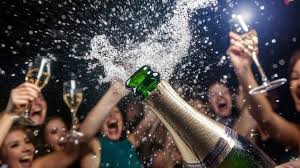
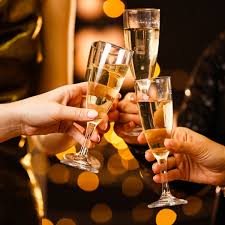
As the clocks chime midnight on December 31 and a brand new year is ushered in, the familiar soundtrack of fireworks, people cheering, and champagne corks popping will echo across the globe. Many of us will instinctively look for a bottle or two of celebratory fizz when buying wine for a holiday party; in fact, it’s been estimated that a quarter of all champagne bottles sold in America are bought between Christmas and New Year’s, with more than 360 million glasses of champagne and sparkling wine enjoyed in the U.S. each and every New Year’s Eve.


But, why do we choose this particular drink to mark one of the biggest dates in the calendar? While drinking champagne has a long and lavish history dating back centuries, it hasn’t always been an option for the majority of people. The sparkling beverage was once associated solely with royal courts and European aristocracy since royalty and nobility were the only ones who once could afford it.

Things began to change after the French Revolution and the huge societal changes that period brought about; back then, champagne quickly gained traction as a desirable way to celebrate special occasions. And, over subsequent years, that signature pop of the cork before pouring the fizzy, lively liquid would become synonymous with one of the biggest communal celebrations of all: New Year’s Eve.

Things began to change in the 1800s

By 1800, the act of staying up until midnight to ring in the new year had become more popular, a tradition which European settlers had brought to America. People began to frequent taverns, as well as visiting others’ houses, for fun-filled midnight drinks, which included punch as well as champagne.

As secular rituals began to replace religious ones following the French Revolution, champagne became more widespread as part of a variety of celebrations. One use was to ‘christen’ a ship, for example, before its maiden voyage. Soon, champagne was about to see a sudden huge surge in popularity and availability as prices dropped and sales boomed from six million bottles in 1850 to a whopping 28 million by 1900 as producers began to market the drink for special occasions.

By the end of the 19th century, champagne was widespread at New Year’s Eve parties. While still associated with luxury, it was more affordable for the middle classes as an occasional treat — and what better way to welcome in a fresh start than with an overflowing glass of aspirational bubbles? Today, champagne is still seen as an occasional celebratory drink by most, with New Year’s Eve proving one of the most popular times to indulge. And with a range of cheaper alternatives these days, from cava to prosecco, there’s even more reason to pop a cork this New Year’s Eve. Cheers to that.


Filed Under: Dayton Dining Tagged With: champagne

C4 (Crafted & Cured with Crémant & Champagne)

October 1, 2017 By Dayton Most Metro

Join us for a special event (and daily Champagne by the Glass launch) as we explode into Autumn with Champagne and other sparkling wines from France!  On Tues, Oct 3rd from 6-10pm the in-house wine guru, Giri Dodballapur, will get help from local sommelier, Michael Freeman, of Vintner Select. Experience Crémant (sparkling wine from French regions other than Champagne) from Limoux, Jura, Burgundy, and Alsace. The last wine will be a Premier Cru Grower Champagne that we plan on launching as a daily regular by-the-glass offering!
That’s right, Grower Champagne. By the glass. Only at Crafted & Cured.

CONSISTS OF 3oz POURS OF EACH $25
Add a pairing plate of French Cheeses $10
Domaine Thevent & Fils Crémant de Bourgogne Brut
Domaine Muré Crémant de Alsace Brut
Domaine J. Laurens ‘La Rose No 7’ Crémant de Limoux Brut
André et Mireille Tissot Crémant de Jura Rosé Extra Brut
Champagne Marc Hebrart Premier Cru Brut

BEGINNING WITH C4, ALL SPECIAL WINE ENGAGEMENTS WILL BE TICKETED IN ORDER TO TAILOR THE DETAILS MORE PROFESSIONALLY. PLEASE RESERVE YOUR TICKET WITH THE LINK BELOW. WE UNDERSTAND PLANS CHANGE AND UNFORESEEN CIRCUMSTANCES ARISE, SO A 24 HR CANCELLATION POLICY WILL ENSURE REFUNDS IF NEED BE.

https://www.townvu.com/craftedcured/ordering/?sid=49575&cat=24&s=f

Filed Under: Dayton Dining, The Featured Articles Tagged With: champagne, Crafted & Cured, sparkling wine

Five For Drinking – The Negroni

June 9, 2017 By Brian Petro

Classic Negroni

The classic Negroni.

For many a bartender, there is a certain allure to the Negroni. It could be the of the simplicity of the recipe: one part gin, one part sweet vermouth, and one part the bitter Italian liqueur Campari. These basic proportions make the cocktail ripe for experimentation. Which means that the gin can be replaced with bourbon or champagne. The Campari can be replaced with any wide variety of bitters, from Aperol to Zucca. Every time you change one of the ingredients, you change the overall flavor profile. While the Negroni will always stand on its own among the classic cocktails, the variations it has inspired have covered the flavor and color spectrum.

The best legend of the creation of the Negroni starts with an Italian nobleman fleeing to America after having a child out of wedlock. Count Camillo Negroni spent some time in the American West, becoming a cowboy and enjoying the lifestyle of a rancher. When everything was a little calmer, he returned to his native country to settle back into his old lifestyle. He sauntered into town one day, looking for a stiff drink. Thinking the popular Americano (1 oz. sweet vermouth and 1 oz. Campari, topped with soda water) was not going to satisfy his thirst, he asked the bartender to substitute the soda water for gin. It was at that point a legend in the cocktail world was born. And like many other cocktails of the era it was mostly lost after Prohibition, showing up once bartenders started to discover the old recipes.

The one ingredient that takes some getting used to.

Several years ago, Imbibe Magazine declared the first full week of June Negroni Week. It is a celebration of this vintage cocktail all over the country, as well as an opportunity for bars and bartenders to give back to their community. For every Negroni purchased at participating venues, a portion of the proceeds is donated to the charity of their choice. You can see the participating venues every year by searching by city or zip code on the Negroni Week website. This year in Dayton, there is one venue celebrating the week: Doctor Doodles is also offering the classic version to help Muttville. If you are planning to spend some time there this weekend, make sure you order one to help either of these amazing pet charities.

What is a classic Negroni, you may ask?

Negroni

1 oz. gin
1 oz. sweet vermouth
1 oz. Campari

Glass: Cocktail or Rocks
Ice: None
Garnish: Orange peel

Pour all of the ingredients into a mixing glass over ice. Stir until the mixture is chilled, then strain into the glass. Twist the orange peel over the cocktail, then drop it in and serve.

If you are a fan of gin and all of its herbal glory, this is an amazing cocktail. The bitter Campari is an acquired taste, but it is blunted by the gin and the sweet vermouth. Start here, and work your way forward…

Not a fan of gin? Bourbon fits just as nicely in this cocktail.

Old Pal

1 oz. bourbon
1 oz. sweet vermouth
1 oz. Campari

Glass: Cocktail
Ice: None
Garnish: Orange peel

Pour all of the ingredients into a mixing glass over ice. Stir until the mixture is chilled, then strain into the cocktail glass. Twist the orange peel over the cocktail, then drop it in and serve.

For those of you that enjoy whiskey more than gin, here is the Negroni variation for you. Swap the herbal gin for the smooth bourbon, and it is like you have an entirely different cocktail. If rye is not your thing, exchange that for bourbon and make yourself a Boulevardier. Either one is fantastic.

Negroni Sbagliato

1.5 oz. sparkling wine (stay in Italy and hit the Prosecco)
1.5 oz. sweet vermouth
1.5 oz. Campari

Negroni Sbagliato

Bubbles make everything better, right?

Glass: Champagne flute
Ice: None
Garnish: Orange peel

Pour the Campari and sweet vermouth into a mixing glass over ice. Stir until chilled, then strain into the champagne flute. Then top off with the champagne and GENTLY stir. Twist the orange peel over the cocktail and drop in.

It is said that while making a Negroni, a hapless bartender accidentally grabbed an open bottle of champagne instead of the gin and poured it in. Instead of dumping it, he served it to his customer and this star was born. I want to see the bar set up that has the gin ANYWHERE close to the champagne. It seems like a stretch. However, the word sbagliato in Italian means “bungled” or “mistaken”, so there could be an

Unusual Negroni (by Charlotte Voisey)

1 oz. Hendrick’s Gin
1 oz. Lillet Blanc
1 oz. Aperol

Glass: Cocktail
Ice: None
Garnish: Orange peel or Grapefruit peel

Pour all of the ingredients into a mixing glass over ice. Stir until the mixture is chilled, then strain into the cocktail glass. Twist the orange (or grapefruit) peel over the cocktail, then drop it in and serve.

If the boldness of the original Negroni is too much for you, Ms Voisey developed a cocktail that dials back all of the intensity. Henrick’s is an amazingly light gin, more cucumber and rose petal than juniper. The Lillet is not very vermouthy, and the Aperol, while bitter and orange, is not as intense as the Campari.

Dark and Smooth Cocktail

A little sweeter, but still with some herbal zing.

Dark and Smooth

1 oz. dark rum
1 oz. sweet vermouth
1 oz. Jägermeister

Glass: Rocks
Ice: None
Garnish: Orange peel

Pour all of the ingredients into a mixing glass over ice. Stir until the mixture is chilled, then strain into the cocktail glass. Twist the orange peel over the cocktail, then drop it in and serve.

I will never stop experimenting with one of my favorite spirits, Jägermeister. I have been fiddling with this concept for a while, and finally figured out that the dark rum is the answer. The cocktail leans to the sweeter side for a Negroni, but the herbal notes hit the nose and the palate at the end.

There are many, many more variations of the Negroni out there. If you want to really see the variety of what people have done with the basics of the cocktail, buy the book Negroni: Drinking to La Dolce Vita, with Recipes and Lore by Gary Regan. It has dozens of recipes, some that stay true to the original, some that stray so far off that it is hard to call them a Negroni. But all of them stay true to the idea of the slightly bitter, herbal original.

Find your favorite cocktailing venue and order a classic. They are a delight on the palate, even though for some it is an acquired taste. And if the original is not to your liking, you can see there are many ways to modify it into something you will enjoy. Count Negroni did it over a century ago, and look how well that has turned out. Cheers!

Filed Under: Dayton Dining, Happy Hour, The Featured Articles Tagged With: bourbon, Campari, champagne, cocktail, DaytonDining, Dry Vermouth, gin, Happy Hour, negroni, Sweet Vermouth, Things to Do

Cocktails with Champagne: A New Way to Ring in a New Year

December 30, 2015 By Brian Petro

Champagne in a coupe

New Year’s Eve means champagne, champagne, and more champagne!

No one appreciates champagne like they used to. The bubbly wine was created, accidentally, in England in the 16th century. The process was developed over the next two centuries, first to get the bubbles on a regular basis, then to create a bottle with the strength to contain the pressure of the carbon dioxide in the wine. Once the bottles stopped exploding, this treat became a favorite in the French courts. The French leaned to the sweeter sec and demi-sec varieties, while the English preferred the drier bruts. The wealthy were the only people that could afford it initially, turning it into a status symbol for extravagance and a rare treat for the working class. Champagne and all of its sparkling white wine compatriots have become much more common since the beginning of the 20th century, but the effervescence of the liquid and the pop of the cork kept the drink in celebratory circles.

New Year’s Eve is here, and champagne corks will be exploding for the evening. Most people will just enjoy the bubbles and the flavor out of either a toasting flute or a coupé. Experts and extreme lovers of champagne will drink it out of a white wine glass, which combines many qualities of the flute and coupé. This is a fine way to enjoy any sparkling wine, but it is not the only way. There are many cocktails over the years that have been developed with champagne as a co-star to other flavors being created. The cocktail, and your tastes, should dictate the type of champagne you choose to add. The list of champagne cocktails is a long, long one, so I have selected a handful that include spirits people usually have on hand or are easy to find.

BOURBON – Seelbach Cocktail

The Seelbach is named after the Louisville, Kentucky hotel it was created in. Most cocktails ask for a dash or two of bitters. This one calls for multiple dashes of two different bitters. They help balance out the sweetness of the champagne and the Cointreau (orange liqueur).

1 oz. bourbon
1/2 oz. Orange liqueur (Cointreau is what the recipe suggests)
7 dashes Angostura bitters
7 dashes Peychaud’s bitters
Champagne

Pour the orange liqueur, bourbon, and bitters into a mixing glass over ice. Stir, and then strain into a champagne flute. Fill with champagne and enjoy.

Belle of Dayton Distillery

Our very own Belle of Dayton, providing something to mix with champagne!

RUM – Sparkling Rum Punch (courtesy of My Recipes)

There are two great reasons to go with a punch when it comes to rum. First, from a traditional standpoint, rum is very common in classic punch drinks. Rum and brandy were very popular libations in the heyday of the punch in the late 18th century through the middle of the 19th century. Second, having a punch cocktail at a party allows guests to help themselves to something delicious as they arrive.

2 c. fresh, low pulp orange juice
.5 c. orange liqueur
.5 c. dark rum (Belle of Dayton has a 1775 Colonial Reserve that looks perfect)
2 750 mL bottles of chilled champagne

Blend the orange juice, orange liqueur, and rum into a medium bowl. Place in the refrigerator to chill and allow the flavors to marry for an hour. Before guests arrive, move the mixture into a larger bowl and add the champagne. Serve chilled.

GIN – French 75

The 75 mm field gun the French used at the end of the 19th – beginning of the 20th century was a massive anti-personnel weapon. It delivered a variety of ammunition to the enemies of France, from shrapnel filled explosive shells to canisters of toxic gas.  When Harry’s New York Bar in Paris blended gin and champagne into one glass, many said the cocktail had the same kick as this powerful weapon. Like the versatile weapon this is named after, it can be made with gin or cognac.

.5 oz. lemon juice (about half a lemon)
.5 oz. simple syrup (1:1 mixture of sugar and water)
1.5 oz. gin
3 oz. champagne

Combine the lemon juice, simple syrup, and gin in a mixing glass over ice. Shake, and strain into a champagne flute. Add the champagne and enjoy!

Tequila Champagne Cocktail

Tiny bubbles…dancing with my cocktail.

TEQUILA – Lime Sparkler (courtesy of She Knows)

This is something like the marriage of Jesse James and Sandra Bullock: you are not sure how it happened or why it worked, but it did. For a while, at least. Fortunately, liquors stay together for a longer time. The tequila-lime-sweet combination is a classic, and the champagne adds an extra burst of flavor.

1 oz. blanco (silver) tequila
.5 oz fresh squeezed lime juice
.5 oz. agave nectar (you can use simple syrup, but the nectar adds some richness)
Champagne

Combine the lime juice, agave nectar, and tequila in a mixing glass with ice. Shake, and strain into a champagne flute. Fill with champagne, and serve.

BEER – Black Velvet

When Prince Albert of England passed away in 1861, the country went into mourning. His wife, Queen Victoria, was inconsolable, and mourned the loss the rest of her life. At the time of his death, everything was draped in black. Clever bartenders at the time poured some Guinness into the champagne served at royal events, giving it the same black covering the rest of the décor had. It did not, however, make the people who drank it sad.

Stout (Guinness is the traditional selection, but any will do)
Champagne

Fill the champagne flute half way with champagne. GENTLY float the stout on top of the champagne. If you pour too quickly, the champagne will foam up and over the edge of the glass.

VODKA – Sparkling Cosmopolitan (courtesy of Inspired Taste)

Champagne cork popping

Happy New Year! And happy cocktailing!

There is a wide variety of cocktails that incorporate vodka and champagne. Vodka is neutral enough to just add some kick to the cocktail and allow any other flavor, usually fruity, to shine through. This is another champagne concoction that modifies a base cocktail by adding some sparkle.

1.5 oz. vodka (Buckeye Vodka fans, this one’s for you!)
.5 oz. orange liqueur
.5 oz. cranberry juice
.5 oz. fresh squeezed lime juice
Champagne

Pour the vodka, orange liqueur, cranberry juice, and lime juice in a mixing glass. Shake well, and strain into a champagne flute. Fill with champagne, and serve.

Whether you are christening a boat or celebrating a major event, champagne’s traditional hold on the celebration market is far from over. There will always be a thrill when the cork pops out and the bubbles start to fly. Keep the cork flying to a minimum, though. Shooting someone’s eye out is not the best way to start the new year. For them or for you. Cheers!

Filed Under: Dayton Dining, Happy Hour, The Featured Articles, Wine Tagged With: Belle of Dayton, bourbon, Buckeye Vodka, champagne, Champagne Cocktails, cocktails, DaytonDining, new year's eve, rum, Tequila, Things to Do, whiskey

Popping the Cork!

December 26, 2014 By Lisa Grigsby

wThere’s no doubt that a bottle of bubbly is the perfect go-to-libation to celebrate New Year.  But how do you choose the right sparkling wine for your festivities? Probably the biggest factors are taste and budget.  If budget is no object, Champagnes like Krug, Dom Perignon and Cristal come to mind.  It’s rare to find a bottle of champagne for under $50.

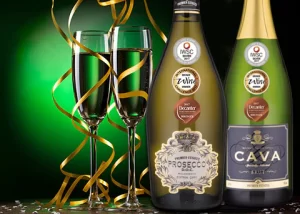
Champagne is the name given to sparkling wines produced in the French region of Champagne. The name “champagne” is protected by law and can only be used by winemakers from that region. But Italy and Spain offer delicious (and less expensive) alternatives with their respective prosecco and cava.  You can pick up a great prosecco or cave for under $20.

But what’s the difference between these three sparkling wines?

The major difference is in the process of fermentation (the “bubble making process”). Champagne goes through a second fermentation in a sealed bottle. For prosecco and cava, the second fermentation is done in a large vat, also known as the Charmat method. The three wines are also made from different grape varietals: Champagne from chardonnay, pinot noir and pinot meunier grapes; cava from macabeo, parellada and xarel-lo grapes and prosecco from glera grapes.600583-1617-21

Each wine has different amounts of fizz, either frizzante or spumante. The easiest way to determine how much fizz your bubbly will have is to simply compare the corks. If the cork has a string attached to it, you’ll have light fizz (frizzante) and if you notice a wire – traditional for Champagne – then you’ll have heavy fizz (spumante).

And in general as far as taste, Champagne is rich and complex, while cava and prosecco are lighter and slightly fruitier.   And the absolute best way to determine what you like is to just taste and that’s easy to do this week, as many of our local wine shops are hosting tastings.  Here are two you won’t want to miss:

Sat, Dec 27th  –  Arrow Wine Tasting –  11am – 5pm
11am – 5pm – either store, casual drop in tasting, nominal cost per taste

Sun, Dec 29th – Dorothy Lane Market 4-6pm

For more wine events, be sure and check our MostMetro.com wine calendar.


Filed Under: Happy Hour, The Featured Articles Tagged With: cava, champagne, new year's eve, prosecco

Five for Drinking: Champagne

December 30, 2013 By Brian Petro Leave a Comment

Glowing champagne

Champagne has its own inner glow.

New Year’s Day is fast approaching. That means a huge celebration of the year we just finished and a leaping off point for the year we are about to tackle. Major celebrations are equated with bringing out the bubbly. The corks are going to pop and champagne is going to flow. It is a lovely, crisp and effervescent drink on its own. It is also a great base for some delicious cocktails.

Champagne in a cocktail has been around for as long as champagne has been around. Here are five cocktails you can make for your guests to add a little more flavor to the mix.

Punch It Up

Punches are classics when it comes to cocktails; people would mix up huge batches for self-service at parties, meetings, and creating Constitutions. It is a simple, delicious way to get a cocktail into your guests’ hands as they walk in the door. Here is a concoction from Allrecipes that is typical of a punch recipe:

Champagne Punch (makes 35 4 oz. servings)

1 12 oz. can of cranberry juice concentrate
1 12 oz. can of pink lemonade concentrate
1 6 oz. can of limeade concentrate
1 bottle of chilled white wine
1 liter of soda water
2 bottles of chilled champagne

In a large punch bowl, combine all of the ingredients. Add a large block of ice to keep it all cold. Garnish with sliced lemons and limes.

Simple to make and delightful to drink. You can change the flavors to the taste of your guests, just mind the proportions.

Keep It Simple

People hear the word “cocktail” and think of something complex, yet elegant. Good cocktails can be just two or three ingredients mixed in the proper proportions. A Black Velvet can be made with ingredients you already have at the party!

Black velvet cocktail

Black Velvet, if you please…

Black Velvet

Stout (Guinness is the traditional choice, but select your favorite)
Champagne

In a glass, mix equal parts stout and champagne. It is just that simple. Just pour SLOWLY. Champagne fizzes a great deal when you add things to it.

Gotta Go Back In Time

Casablanca is one of my favorite movies of all time. Captain Renault spends a good deal of the movie ordering and consuming champagne cocktails. It is not a generic cocktail name, but something specific (and simple) to make.

Champagne Cocktail

1 sugar cube
4 dashes Angostura bitters
Champagne

Put the sugar cube and bitters into a champagne flute or coupe. Pour the champagne over the other ingredients and garnish with a twist of lemon. Enjoy!

Before processed foods, sodas and easily accessible juices, sugar and bitters were very popular ingredients used to flavor drinks.

Show Off Your Skills

Here is a rare gem of a cocktail. It was created in Louisville in 1917, named after the hotel it was invented in, then lost until 1997 when it was printed in New Classic Cocktails. It is a vintage cocktail that has not caught on, and I have no idea why. It is delightful.

Seelbach Cocktail

1 oz. bourbon
.5 oz. orange liqueur
7 dashes Angostura bitters
7 dashes Peychaud’s bitters
5 oz. champagne

Pour all the ingredients except for the champagne into a flute and stir. Add the champagne and give it a few more gentle stirs. You can use an orange twist as a garnish.

It takes a few more ingredients, but it is well worth it. Bitters last for a long time, so you can play with different cocktail and cooking combinations through the year.

Waterford crystal Times Square ball

The ball that is going to drop to end 2013. What will you be drinking?

Something New

I have been known to play with an ingredient or two. One of my favorite things to do as a bartender is make things up on the spot, using past recipes as a base to launch off of. This recipe is a result of that.

Ginger Spiced Champagne

1 oz. ginger liqueur
.5 oz. raspberry liqueur
1 oz. cranberry juice
Champagne

Mix all of the ingredients except for the champagne in a champagne flute. Add the champagne and give it a gentle stir or two.

The ginger and cranberry add a little bite to the sweet champagne. It may take a few ingredients that you do not have around the house, but the end result is well worth it.

One thing to remember about using champagne with a cocktail is that the champagne should be the star. It is more than just a mixer; it adds sweetness and sparkle to whatever it is being mixed with. Of course, if there is any champagne on January 1st you can make mimosas. Happy New Year!


Filed Under: Dayton Dining, Happy Hour, The Featured Articles, Wine Tagged With: bourbon, celebration, champagne, cocktails, Dayton, Dayton Dining, new year's eve, punch, Stout

Tasting the Stars in Champagne

February 14, 2013 By Brian Petro 18,068 Comments

“I only drink champagne when I’m happy, and when I’m sad. Sometimes I drink it when I’m alone. When I have company, I consider it obligatory. I trifle with it if I am not hungry and drink it when I am. Otherwise I never touch it – unless I’m thirsty.” ~Madame Lily Bollinger

Champagne coupe

Originally, champagne was served in glasses that looked like this.

Madame Bollinger would know the best time to drink champagne. As one of the greatest women to work in the champagne industry in the house whose name she bears, Mme. Bollinger brought champagne through the Great Depression and World War Two. She promoted a style of champagne that changed the industry, moving it from the sweeter side of the spectrum to the dry the British always seem to favor. She was the face of the Bollinger brand, an unusual position for a woman in 1941, and through her efforts, helped the city of Ay, after the war, while earning several honors from both Great Britain and France. She continued the tradition of providing the royalty of England with champagne for all of their events, but more importantly creating champagne so iconic that even James Bond drinks it.

Champagne is a drink of celebration, and is there a better time to be celebrating than on Valentine’s Day? Love is in the air, chocolates and flowers are roaming through offices and homes around the world, so why not bring out that bottle of champagne you were saving for a special occasion? And while you are enjoying your wine, enjoy some interesting facts, trivia, and quotes about this bubbly beauty.

  • Dom Perignon, considered the father of champagne, was not trying to create a sparkling drink. He was trying to demi_sec
    prevent it. The bubbles in champagne were a flaw caused by secondary fermentation. Cold stops the fermentation process, and can leave some sugar in the bottle. When spring comes back and the weather warms up, the fermentation starts up, and creates the fizz. Dom Perignon was the father of blending grapes before pressing them.
  • The grapes blended to make champagne in the modern era are Chardonnay, Pinot Noir, and Pinot Meunier.
  • Modern champagne tastes were determined by the British. Champagne was first deliberately created by a man named Christopher Merret in the mid 17th century. They liked the carbonation in their wine, though it was the French king that Louis XIV made it popular with the nobility. It was much sweeter at the time. It was the British again that demanded drier and drier champagne, giving us the general range of sweetness we enjoy today.
  • Uncorking a bottle of champagne is serious business. Before the glass was strong enough, the secondary fermentation caused bottles to explode. All of that gas with no outlet builds up pressure. It can be up to 90 PSI, just under three times what is recommended in a car tire. Plenty of pressure and a little neck, when put together, create a weapon that can shoot the cork at speeds of up to 50 MPH. That could put your eye out. Ain’t nobody got time for that on Valentine’s Day.
  • If you are going for distance, not speed, you are going to have to shoot your cork over 178 feet to break the world record, set by an American in 1988.
  • Champagne_bubblesThe bubbles are crucial to the enjoyment of the champagne. There is an estimated 49 million bubbles in a bottle. Moet and Chandon, in tandem with Heineken, spent $7 million dollars on special photography that revealed 250 million bubbles were contained in each bottle. To get the most bubbles in your bubbly, cool the bottle to about 45 degrees F. With the bottle at a 45 degree angle, put the bottom of the bottle against your hip or thigh. The first thing you will need to do is remove the foil, then the cage on the cork. Be careful; sometimes the cork is loose, and removing the cage will cause the cork to pop. Take a towel and wrap it around the neck, making sure you cover the cork. Holding tight to the cork, twist it gently until it comes out. The less noise you make, the more bubbles you get to enjoy in your glass.
  • Champagne only comes from France by international law. Champagne is part of the larger group of sparkling wines you can find anywhere in the world. If you get it in Italy, it is prosecco , which is becoming very popular. Spain has cava, Germany has sekt, and Portugal has espumante.

    Bottle of Cava

    The Spanish sparkling wine cava, made mainly in the Catalona region.

  • How sweet do you want your champagne? Brut Nature  is the driest of the dry, with no sugar, or very little, added to the wine. Extra Brut has some sugar added, but it still very dry. Brut is the most commonly purchased champagne, and is still a little on the dry side. Extra sec has a little more sweetness than Brut, and a little more sugar added. Demi Sec is dessert-level sweet, with quite a bit more sugar added. Sec is a very sweet champagne, definitely served after a meal as a dessert.
  • We prefer to drink champagne in a flute, but if you watch older films, you can see them drinking champagne out of a wider glass known as a coupé. It does not hold the bubbles as well, but was the traditional way of drinking champagne. It is also said to be molded from the breast of Marie Antoinette. Let them eat cake indeed…
  • Beautiful women have always been linked to champagne. One of the most beautiful women of all time, Marilyn Monroe, is rumored to have taken a bath in over 350 bottles of champagne.
  • The tallest champagne flute was revealed at a festival in Italy. It stands seven feet tall and can hold twenty two bottles of champagne. The largest bottle of champagne currently made is called Midas, holding forty regular sized bottles of premium bubbly. Only six were made, at a cost of $100,000 a bottle.

While Valentine’s Day is a special day and calls for a special celebratory beverage, champagne is something that can be enjoyed every day. The season of champagne tastings is usually in December for New Years or Christmas, but many restaurants will sell certain champagnes by the glass if you are looking to try some out. The staff here will let you know when the next tastings or events are.  Spend today surrounded by friends and loved ones, and celebrate with a drink that has a little more sparkle.

Filed Under: Dayton Dining, Happy Hour, The Featured Articles, Wine Tagged With: cava, champagne, Dayton, Dayton Ohio, DaytonDining, facts, France, fun, history, prosecco, trivia, Valentine's Day

Waiter, There is Champagne in my Cocktail…

December 28, 2012 By Brian Petro 1 Comment

bellinibar
Champagne is a beverage that we bring out only at special celebrations. It was the French royalty at the beginning of the 18th century that popularized the trend of drinking this sparkling beverage. It became perceived (with marketing help from the grape growers in the Champagne region of France) as a drink of the affluent, so the people of the middle and working classes only would drink it for special occasions.  Even though champagne and other sparkling wines have become fairly easy to find and purchase at a modest price, it is still something we associate with infrequent celebrations and special events. We see it when sports teams win championships, when couples get married, maybe when someone smashes a bottle of it to christen a boat, and of course, New Year’s Eve. People sip it straight out of a flute or a coupe if they are feeling a little more vintage vibe. What you do not see much of is people mixing it into a cocktail.

A mimosa at breakfast is typically the extent of people’s experience with a champagne based cocktail. Possibly a bellini for brunch or a light lunch drink. There are so many more cocktails you can make with champagne as the base, playing off the general sweetness and effervescence of it. The one thing you always want to keep in mind: champagne is very carbonated. Take care when you are mixing the ingredients together. Also, champagne is a sparkling wine specific to the Champagne region of France. It belongs to the larger category of sparkling white wines where you will find cava (Spain), prosecco (Italy), and sekt (Germany). For the purposes of the recipes, I am going to use what the original source calls for. You can use other sparkling wines, but the taste will vary accordingly.

Champagne Cocktails 101

Here are a few cocktails you can make with champagne and common liquors, or other mixers you may have at your party.

BelliniBellini by quinn.anya

1.5 oz. peach schnapps
4-6 oz. prosecco

Pour the peach schnapps into a flute, and then add champagne. Stir gently, and garnish with a peach slice.

Before all of you bartenders and other cocktail experts leap upon me, a traditional bellini is made with white peach puree, not peach schnapps. If you can find the ripe peaches in the store, or premade peach puree, substitute that for the peach schnapps.  I have even
seen this recipe called a Dirty Bellini.

Mimosa by Dinner SeriesMimosa

2 oz. orange juice
.25 oz orange liqueur (triple sec, Grand Marnier, etc.)
4-6 oz. champagne

Pour the orange juice into the flute, and then add champagne. The orange liqueur is added last, as a float, and is optional if you do not have it available. It will also not be bad to have on New Year’s Day.

Black Velvetimage_79111

Stout (Guinness is the traditional choice)
Champagne

Add equal parts stout and champagne into a pilsner glass. It is a bigger trick that you might think. I will usually put the champagne in first, and then add the stout VERY slowly, keeping a close eye on the bubbling of the champagne. When Prince Albert passed away, the whole country went into mourning with Queen Victoria. Even the champagne, with the help from Guinness, was black with sorrow.

Champagne Cocktails 201

Very popular, you may need to purchase a few specialty ingredients, or make a few extra preparations for these cocktails.

Kir Royale

.5 oz Crème de cassis
6 oz. champagne

Pour a standard pour of champagne in a flute and add the crème de cassis. Crème de cassis is a black currant flavored liqueur. A kir can also be made in a similar fashion, substituting a dry white wine for the champagne.

Champagne Cocktail

Sugar cube soaked in Angostura bitters (2 dashes of bitters should do)
6 oz. champagne
Splash of cognac (optional)

Place the sugar cube in the bottom of the flute. Pour the champagne over the cube, allowing the sugar and bitters to dissolve. The cognac float at the end is more popular in England than it is here. This is another notable vintage cocktail, something you will see mentioned in more than a few black and white movies. Talkies, as the kids call them.

PoinsettiaRed-Champagne-Cocktails-small-300x300

3 oz. cranberry juice
1 oz. orange liqueur
3 oz. champagne

Pour the cranberry juice and orange liqueur into a flute and stir together. Add the champagne and enjoy. It is seasonal, festive, and delicious.

Champagne Cocktails 301

These are going to take liqueurs that are a little more obscure or expensive, and much more preparation.
They may be a little less known generally, but have a place in cocktail history.

Death in the Afternoon

1 oz. absinthe or Pernod
5 oz. champagne

Pour the absinthe into a flute, and then add champagne. Absinthe balances out the sweet champagne with a hint of wormwood and licorice flavors. Ernest Hemmingway, who is credited with the creation of the drink, also suggests in the recipe to enjoy three to five in the afternoon. This probably explains quite a bit about his work.

French 75french75

1 oz. gin
.5 oz. lemon juice
1.5 tsp. simple syrup
4 oz. champagne

In a mixing glass, combine the gin, lemon juice, and simple syrup. Shake it, and strain the contents into a Collins glass over ice. Top it off with the champagne and gently stir it. Garnish with a cherry and an orange slice. If you are not a fan of gin, you can substitute it with cognac. This cocktail got its name because it was said it felt like you were hit with a French 75mm field gun, a staple of the French army during World War I and the first piece of modern artillery. Boom.

Seelbach Cocktail

1.5 oz. bourbon
.5 oz. orange liqueur
7 dashes Angostura bitters
7 dashes Peychaud bitters
4 oz. champagne

Mix the bourbon, bitters, and orange liqueur briefly over ice, and strain into a flute. Top off the mixture with champagne. It was created at the Seelbach Hotel in Louisville just before Prohibition hit, and the original recipe for this cocktail was lost. It was found recently and brought back to life, with a shocking amount of bitters that offer some balance to the sweetness of the champagne, bourbon, and orange.

Champagne Flutes via bifishadowYou know champagne is going to be in the mix on December 31st. With a little more planning and a few more purchases, you can have a wide range of cocktails available that can be made with that single ingredient. Of course, there is nothing wrong with just enjoying it as it comes out of the bottle. If you enjoy a little too much of it (since you will not be driving, right?), we have a few remedies for the hangover on January 1st.

Have a wonderful and safe New Year’s Eve, and a prosperous 2013.

Cheers!


Filed Under: The Featured Articles, Wine Tagged With: champagne, cocktails, Dayton, Dayton Ohio, DaytonDining, entertaining, history, Holiday, new year's eve, Things to Do, Things to do in Dayton

Primary Sidebar

Submit An Event to Dayton937

Join the Dayton937 Newsletter!

Trust us with your email address and we'll send you our most important updates!
Email:  
For Email Marketing you can trust
Back to Top

Copyright © 2025 Dayton Most Metro · Terms & Conditions · Log in